Few devices are entrusted with as much private information as our smartphones. That makes comprehensive privacy features built into the operating system, along with the individual customization of all privacy settings, all the more important. Just recently, innovation leader Apple introduced new, stricter privacy rules in its iPhone operating system iOS. To the annoyance of data-hungry companies, customers can now decide for themselves which apps are allowed to collect data for marketing purposes and which are not. Shortly afterwards, Google followed suit with its Android operating system. Not for the first time, Apple positioned itself as a pioneer in smartphone security and data protection.
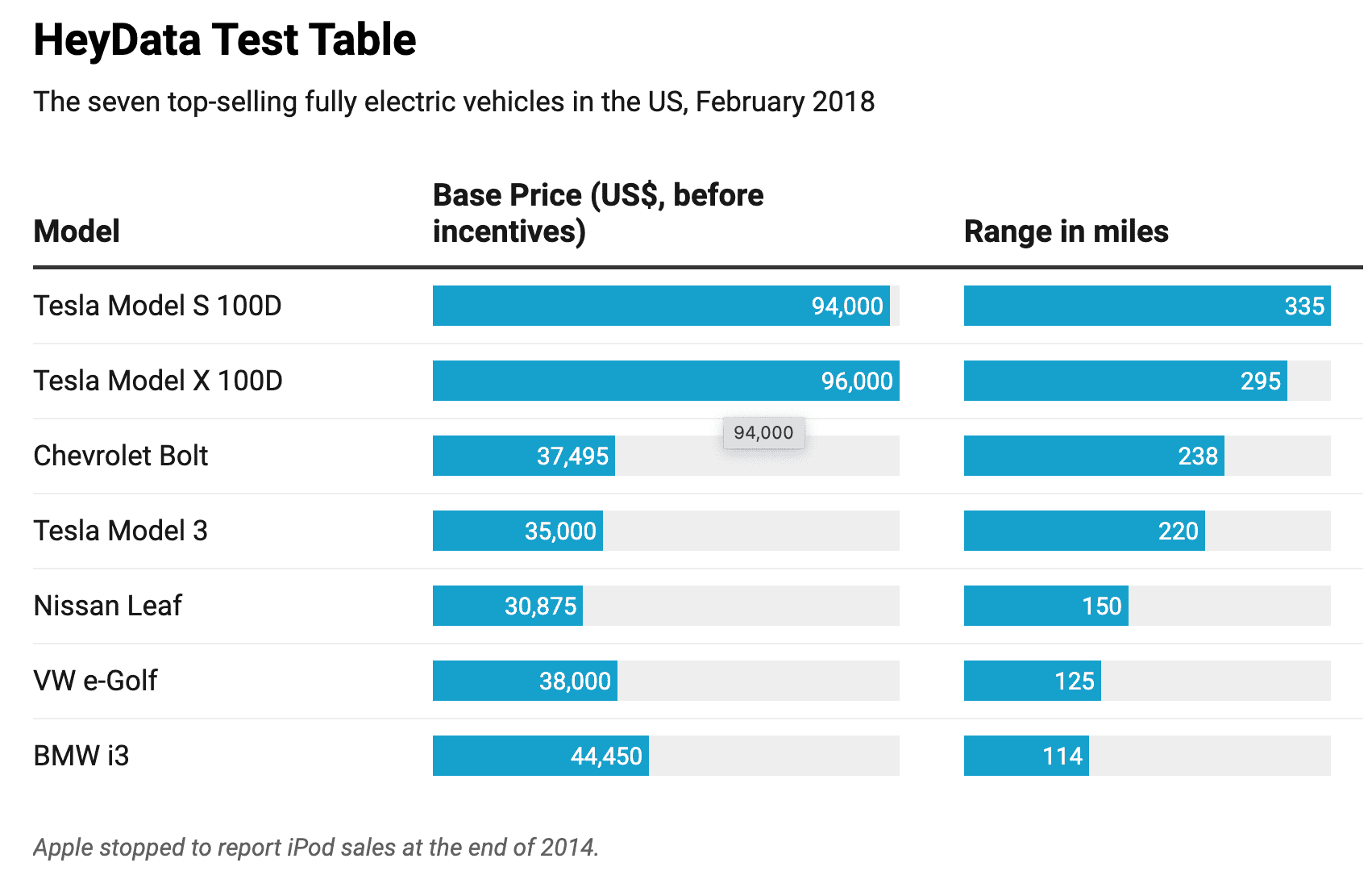
With a small study, we wanted to examine the state of smartphone security among users in Europe. To do so, we analyzed relevant survey data from 25 European countries, such as the prevalence of security systems and the use of privacy settings. From this, we then calculated a smartphone security score. A maximum of 600 points could be awarded. The closer a country comes to this figure, the higher its smartphone security level can be rated.
Source: Manufacturer's specifications Get the data Created with Datawrapper
High Level of Data Protection in Germany, Room for Improvement in Spain
With 439/600 points, smartphone users in Germany show an above-average level of security. 87% of Germans know that their smartphone has security functions and privacy settings. 65% of respondents from Germany even use these features actively. 97% report never having had problems with viruses or other malware. The data from Austria also reflects a broad understanding of data protection and privacy on smartphones. Austria's smartphone security score is 412/600 points. 98% of Austrians know that they can customize their privacy settings individually.
North Macedonia and Spain, above all, need to catch up when it comes to smartphone security and data protection. With 216/600 points, Spain performs exceptionally poorly in the European comparison. Only one in three Spaniards knows at all that many smartphones already come with a pre-installed security system.
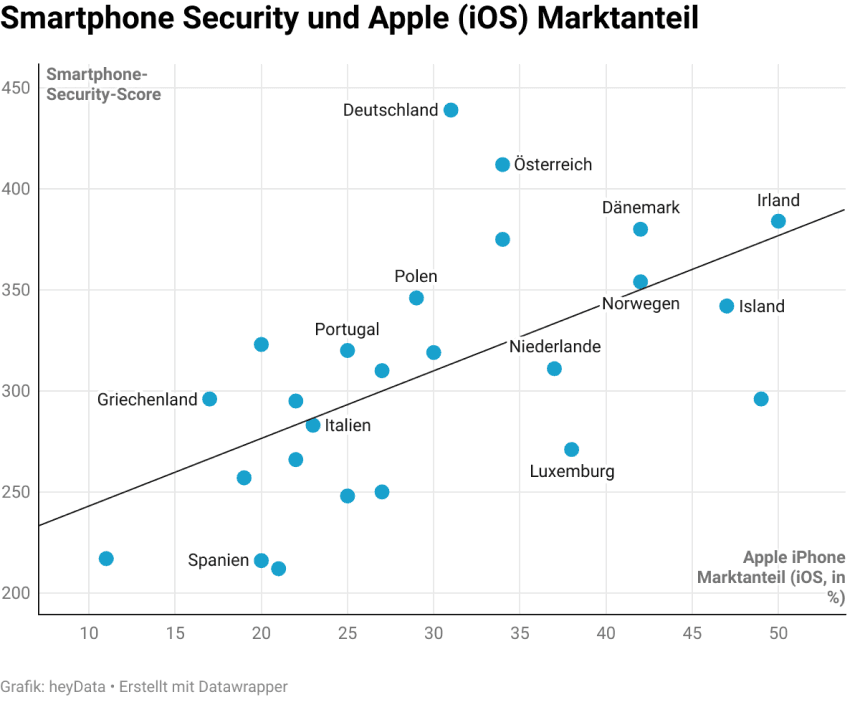
The prevalence of Apple's iPhone has only a marginal influence on the level of data protection and security in Europe. Countries where Apple holds high market shares, such as Ireland, Denmark, and Norway, also achieve relatively high smartphone security scores. There are some exceptions, however, such as the United Kingdom. Countries where Apple holds only a small market share, on the other hand, perform comparatively poorly in terms of security level. These countries include, for example, Bosnia and Herzegovina, Romania, and Spain.
Country Selection:
Austria, Bosnia and Herzegovina, Denmark, Estonia, Germany, Greece, Hungary, Iceland, Ireland, Italy, Latvia, Lithuania, Luxembourg, Malta, Netherlands, North Macedonia, Norway, Poland, Portugal, Romania, Serbia, Slovakia, Slovenia, Spain, United Kingdom
Factors, Definitions, and Sources for Survey Data
Security in the Operating System:
Share of respondents whose smartphone has a security system integrated into the operating system, in percent
Security Through Apps:
Share of respondents who have installed a third-party security system, such as one from an app provider, in percent
Knowledge of Smartphone Security:
Share of respondents who know that their smartphone has a security system installed, in percent
Active Users:
Share of respondents who customize their privacy settings individually, in percent. Source: All information is based on data from the Statistical Office of the European Union on "Trust, security and privacy - smartphones".
Secure Users:
Share of respondents who state that they have never had security problems, in percent
Apple iOS Market Share:
This information was taken manually from Statcounter (as of August 2021) for all countries except Poland. For Poland, Device Atlas was used as the source.