Your QMS. Clearly structured. Ready for your certification audit.
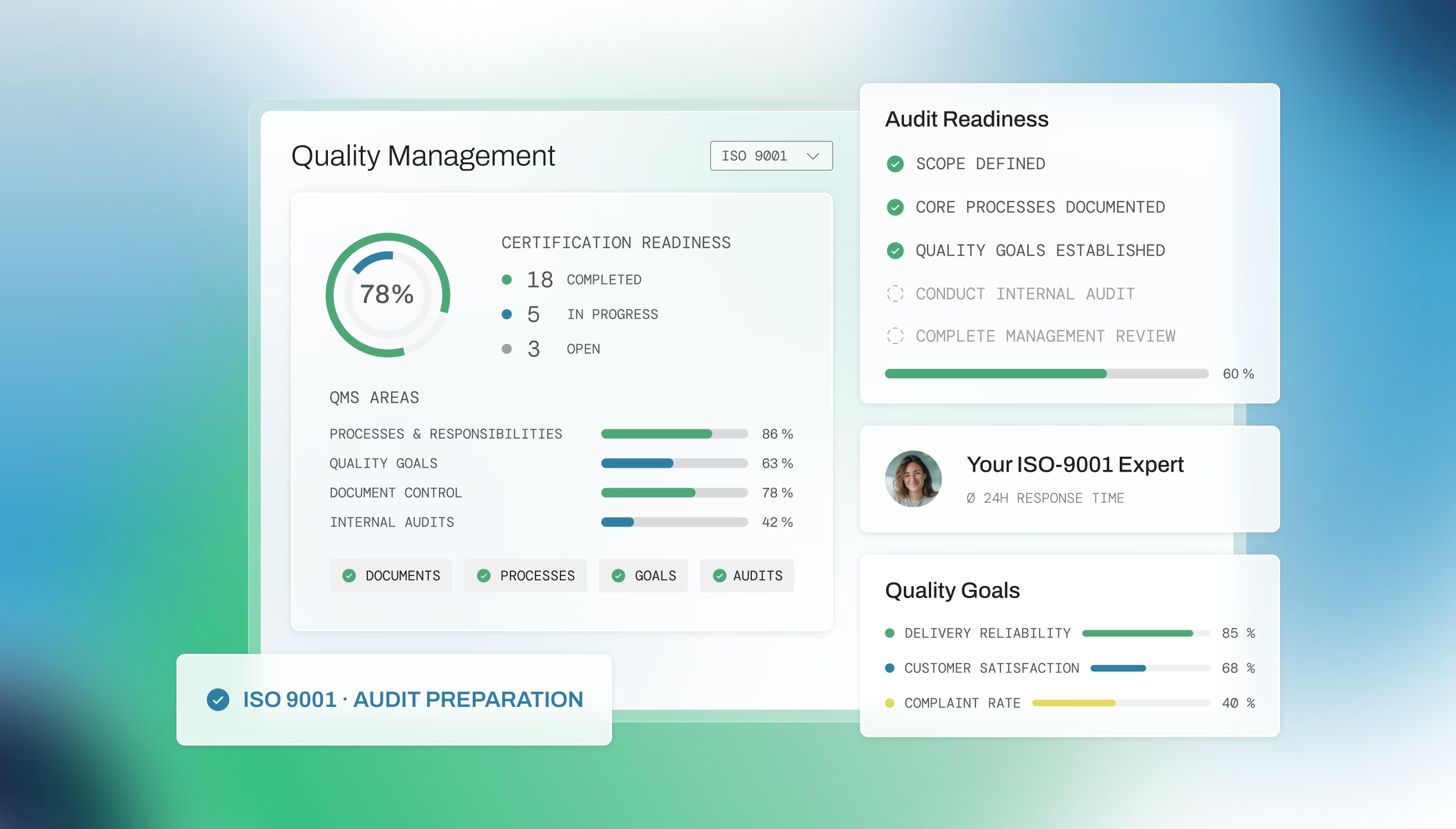
heyData guides you through the audit process step by step, with guided workflows, controlled documentation, and ISO experts by your side. Certification is issued by an independent certification body.

.avif)
.svg)
.svg)
_Leader_Leader.svg)
_MostImplementable_Total.svg)
.svg)
A clear path to certification. A system that keeps working long after.
Quality works, until growth exposes the gaps
Your processes have grown organically, customers are asking for proof, and knowledge is scattered across people, folders, and tools. ISO 9001 turns that into a system your team can use and an auditor can follow.
A customer or tender requires ISO 9001
The contract is within reach, but procurement requires a certificate. Without a defined scope, documented processes, and solid evidence, certification becomes the bottleneck.
Processes depend on individual people
When workflows and responsibilities are unclear, onboarding takes longer, handoffs get shaky, and the same mistakes keep happening.
Your QMS stays a documentation project
Policies and templates don't create quality on their own. Objectives, customer feedback, supplier performance, audits, corrective actions, and management review need to be part of daily work.
A QMS your team will actually use
Everything in one place
- Guided mapping to ISO 9001 requirements
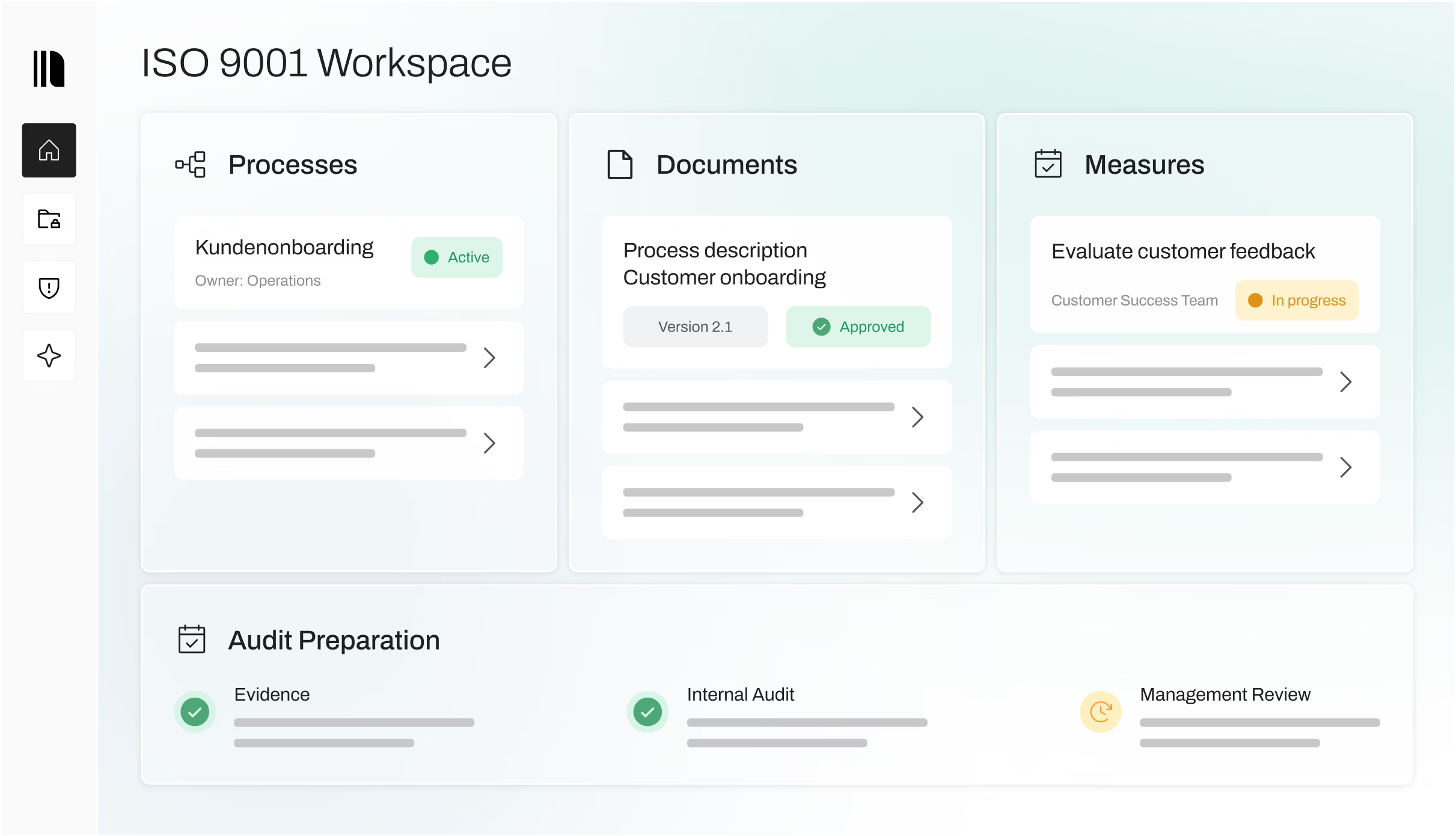
- Processes, responsibilities, objectives, risks, and evidence in a single system
- Controlled documents with versioning, approvals, and acknowledgments
- A central view of tasks, nonconformities, actions, and audit status
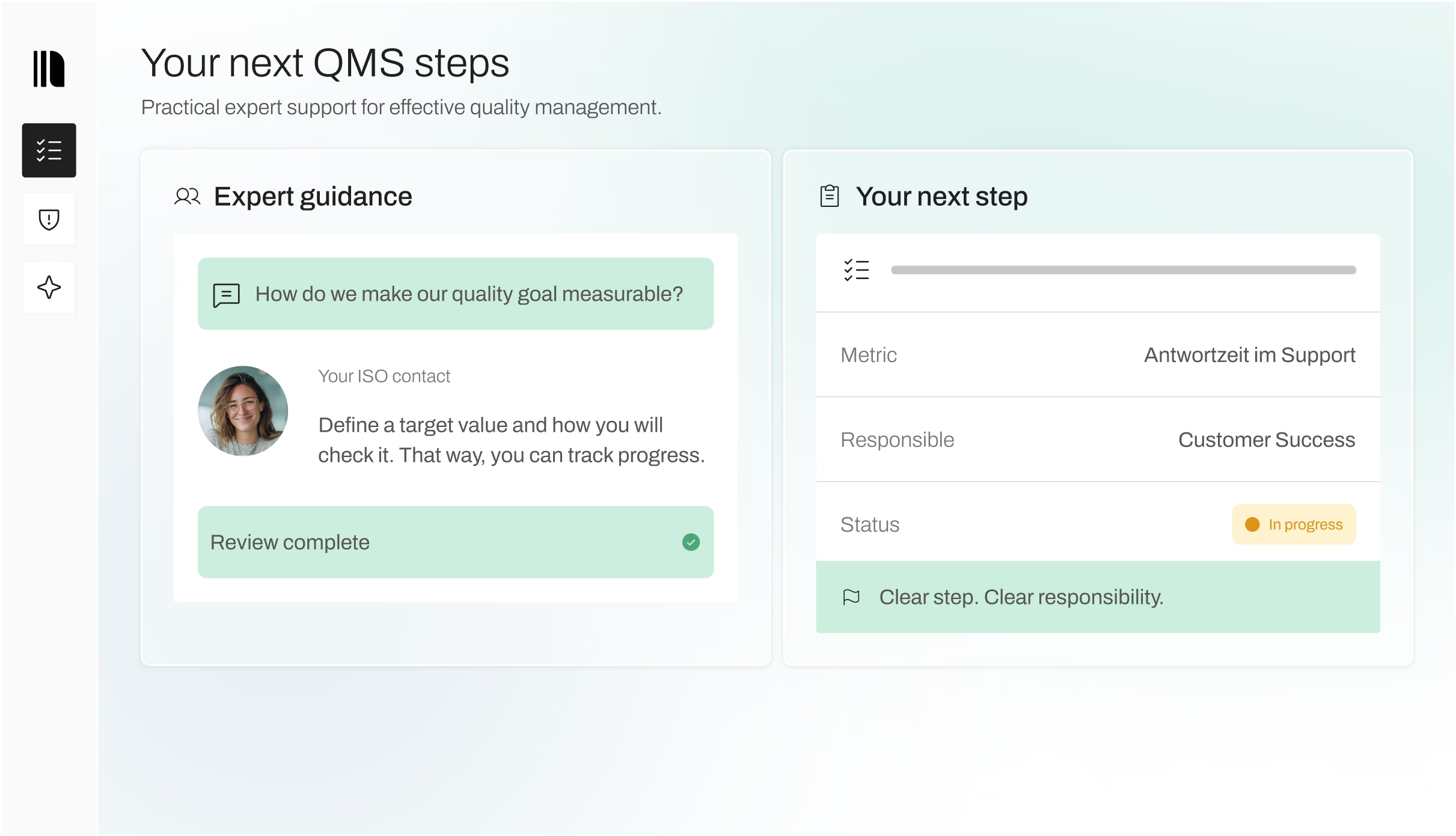
Experts who turn requirements into action steps
- Personal support throughout implementation
- Help with scope, process structure, quality objectives, and documentation
- Preparation for internal audits, management review, and your certification audit
- Clear answers to your technical questions
- On request: introductions to accredited certification bodies
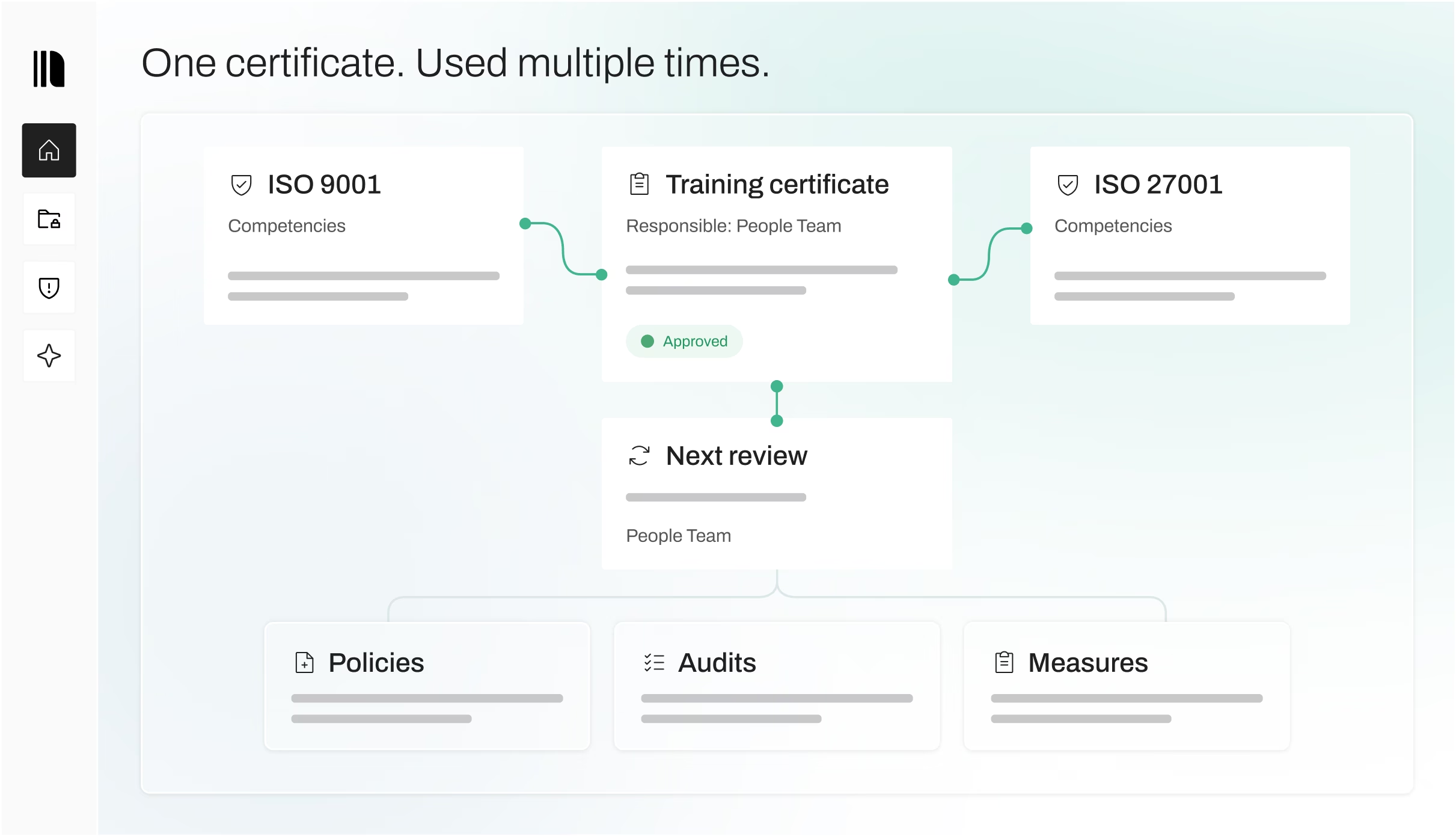
One management system instead of another silo
- Share common structures across ISO 9001 and ISO 27001
- Connect governance, risks, policies, competencies, audits, and actions
- Create evidence once and map it to multiple requirements
- Manage responsibilities and review cycles across frameworks
- Built from day one for surveillance and recertification audits

What you can cover for ISO 9001 with heyData
From process design to continual improvement, every QMS building block in one guided system.












Show how your company really works
Define core and support processes, assign owners, and document inputs, outputs, and interfaces. Your QMS reflects the actual work, not just templates.
One valid version. Every change traceable.
Manage policies, procedures, and records with review cycles, approvals, version history, and acknowledgments. Your team knows what applies, and auditors can see what changed.
Turn quality objectives into tasks
Set measurable objectives, assign owners, and keep an eye on your KPIs. Risks and opportunities are captured and addressed in a structured way.
Quality is everyone's responsibility
Define responsibilities, run training, and document competencies and acknowledgments. New hires start with a structured onboarding right away.
Catch problems before they repeat
Evaluate suppliers, log customer feedback and complaints, and document defective products, services, or process outputs, all linked directly to owners and corrective actions.
Stay audit-ready, instead of getting audit-ready
Plan internal audits, document findings, and prepare for management review. Corrective actions are tracked and checked for effectiveness, even after certification.
What our customers say
2,500+ customers trust heyData with their information security.



From customer requirements to the ISO 27001 security standard
How Sprintwerk successfully achieves ISO 27001 certification with heyData and integrates information security into their daily workflow.
With heyData, we save time, reduce risks, and actively strengthen our customers' trust.
Thanks to the platform, we can handle onboarding centrally and efficiently.
What sets heyData apart is its responsiveness and fast execution.
The software helps us document all IT security measures relevant to data protection and review them regularly.
Who ISO 9001 is particularly relevant for
Technology & SaaS providers
Repeatable processes for development, implementation, support, and customer success—especially when enterprise clients require a certified QMS.
Manufacturing & engineering
Standardize production and delivery processes, improve supplier quality, reduce recurring errors, and demonstrate quality management to customers.
Consulting & professional services
Consistent project quality, seamless handovers, and structured customer feedback. Quality becomes less dependent on the knowledge of individual employees.
Logistics & construction
Organize quality-relevant processes, responsibilities, suppliers, and documentation across projects, locations, and teams.
B2B suppliers & contractors
Meet procurement and supply chain requirements and demonstrate through independent audits that quality is managed systematically.
Growing companies
Establish clear responsibilities and measurable processes before complexity leads to quality issues.

From scattered processes to a certification-ready QMS
No manual nobody reads. No templates disconnected from daily work. A guided path that embeds ISO 9001 in your company.
Define your scope and identify gaps
Decide which areas the QMS will cover. Map your processes and interested parties, review existing documents, and turn open items into a prioritized plan.
Build and roll out your QMS
Define processes, responsibilities, quality policy, and objectives. Capture risks and opportunities, control your documents, set supplier criteria, and organize training and records. Our experts tailor the system to your company.
Test the system and close gaps
Collect evidence from day-to-day operations, evaluate KPIs and customer feedback, and carry out an internal audit and management review. Nonconformities are documented and effectively resolved.
Get certified and keep improving
Go into the certification audit with well-organized evidence and clear responsibilities. Afterward, heyData supports you with recurring tasks, checks, and audit workflows for surveillance and recertification audits.
Personal support · Faster certification
Why heyData.
A functional QMS requires more than just documents – and more than ad-hoc consulting.
Security is part of our operations.
EU data sovereignty, in-house legal counsel, ISO 27001-certified hosting
.svg)
_Leader_EMEA_Leader.svg)
European Provider
German company, European law, no access by non-EU authorities.
Regular Security Audits
Continuously audited and securely developed.
Encryption & Access Control
Encrypted data, clearly defined access.
Vetted Experts
An ISO 27001-ready management system.
How far is your company from ISO 9001 certification?
In a short check, we'll look at your processes and documents, point out the biggest gaps, and lay out a realistic path to a certification-ready QMS.
No obligation. Just a clear assessment.
Frequently asked questions about
Cyber Resilience Act
Can't find what you're looking for? Our team will get back to you within one business day.
What is ISO 9001?
What is ISO 9001?
ISO 9001 is the internationally recognized standard for quality management systems. The standard defines requirements that help companies ensure consistent quality, meet customer expectations, measure performance, and continuously improve their processes.
Is ISO 9001 certification mandatory?
Is ISO 9001 certification mandatory?
There is generally no statutory requirement. Many companies choose to get certified because it is a prerequisite for customers, tenders, or supply chain partners. Industry-specific or contractual requirements may also apply.
Does heyData issue the ISO 9001 certificate?
Does heyData issue the ISO 9001 certificate?
No. heyData is not a certification body and does not conduct certification audits. We support you in building, operating, and preparing your QMS for an audit. The assessment and certification decision are handled by an independent, accredited certification body—this separation is a regulatory requirement.
How long does ISO 9001 certification take?
How long does ISO 9001 certification take?
This depends on the scope, company size, process complexity, and existing structures. You will also need evidence that the QMS is actually working in day-to-day operations. After an initial assessment, we will provide a realistic estimate and a concrete implementation plan.
Do we need a dedicated quality manager?
Do we need a dedicated quality manager?
You need clear internal accountability and active involvement from management – how the role is structured depends on your company. heyData provides the structure and technical support, while the implementation and operation of the processes remain with your team.
Do we need a QM manual?
Do we need a QM manual?
A standalone QM manual is no longer mandatory under ISO 9001:2015. What is required is controlled documented information that fits your company, along with evidence that your QMS processes are effective. The decisive factor is always the version of the standard against which you are being certified.
What changes with ISO 9001:2026?
What changes with ISO 9001:2026?
ISO 9001:2026 was released on September 16, 2026, and replaces ISO 9001:2015, which has now been withdrawn. Key focus areas include: alignment with the Harmonized Structure, a stronger emphasis on leadership and quality culture, the separate treatment of opportunities and risks, change planning, organizational knowledge, and climate aspects (already included in the 2015 version via Amendment 1:2024). The structure and process-oriented approach remain, with only minor adjustments to the core requirements in sections 4–10. A transition period of approximately three years is expected for existing certificates. The binding rules for this are determined by the International Accreditation Forum (IAF – the global umbrella organization for accreditation bodies – as well as national accreditation bodies and your certification body. ISO 9001:2026 is already integrated into heyData: you can build your QMS directly according to the new version or migrate an existing system – simply coordinate the timing of your transition audit with your certification body.
Can we manage ISO 9001 and ISO 27001 together?
Can we manage ISO 9001 and ISO 27001 together?
Yes. While the standards pursue different goals – quality and information security, respectively—they share common building blocks: context, leadership, risk-based planning, competence, documented information, internal audits, management review, and improvement. You can leverage these structures multiple times within heyData.
What happens after ISO 9001 certification?
What happens after ISO 9001 certification?
The QMS must be continuously maintained and improved: internal audits, management reviews, performance monitoring, corrective actions, and certification body audits – typically annual surveillance audits and recertification every three years. heyData keeps tasks, documentation, responsibilities, and audit preparation in one place at all times.