The Biggest Data Collectors in the App Store
heyData Analyzed Over 100 Popular Apps From the German Apple App Store
Since the launch of the iPhone in 2007, we have witnessed the rapid spread of smartphones firsthand. Since 2009, the number of smartphone owners has increased tenfold, from 6.3 million to 62.6 million in 2021 (Statista). For almost every one of us, mobile applications — apps — have become an essential part of daily life. On average, we spend almost four hours a day with and on our devices (FAZ). From banking to transport to grocery shopping and mental health care: by now, there's an app for almost everything. More than two million apps are available for download in Apple's App Store alone. More than 90 percent are free. This raises the question: how do the developers of these apps make their money?
A recent analysis of the Google Play Store already revealed that some of the most popular free apps require access to, in some cases, more than 70 private data points for their use. Thanks to the GDPR, prior consent from the user is required, but once access is granted, the apps can use our personal data to their advantage. For example, by selling it to other advertisers.
In our latest analysis, we took a look at Apple's App Store and examined more than 120 of the most popular iPhone apps in Germany. We wanted to find out which applications are particularly interested in our data in order to:
- sell it to third parties and advertisers
- use it for their own marketing
- use it to track us across other apps and websites
These Apps Are Busy Selling User Data to Third Parties
Created with Datawrapper
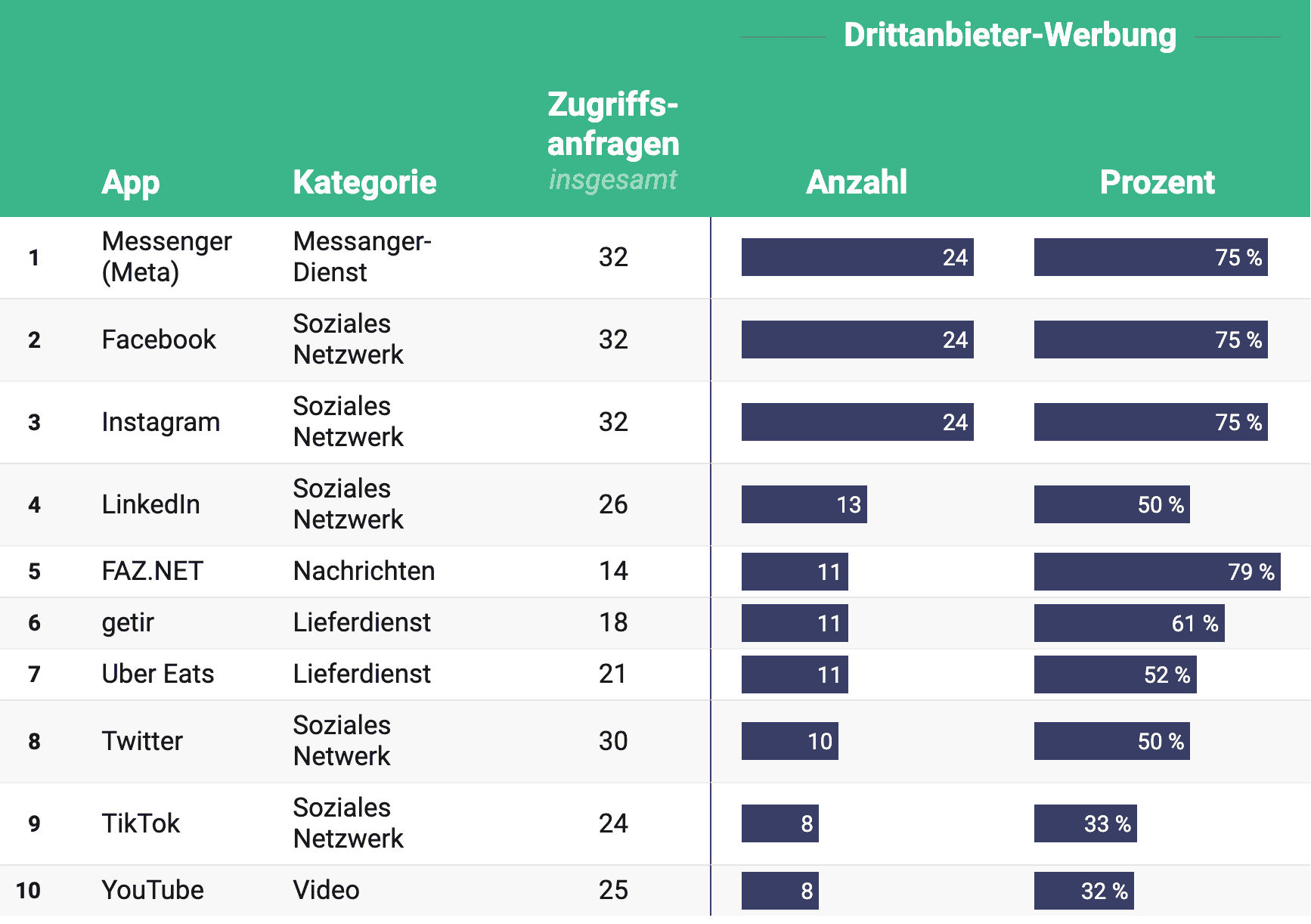
The Meta apps Messenger, Facebook, and Instagram monetize a particularly large share of our "donated" data. Of a total of 32 access requests that each of the three apps makes before use, the majority — 75 percent — are used for third-party advertising purposes. Close behind is another US platform giant, LinkedIn, followed by the news app of the Frankfurter Allgemeine Zeitung. 79 percent of the FAZ app's access requests serve to sell data to third parties for advertising purposes.
These Apps Always Know Where We Are
Created with Datawrapper
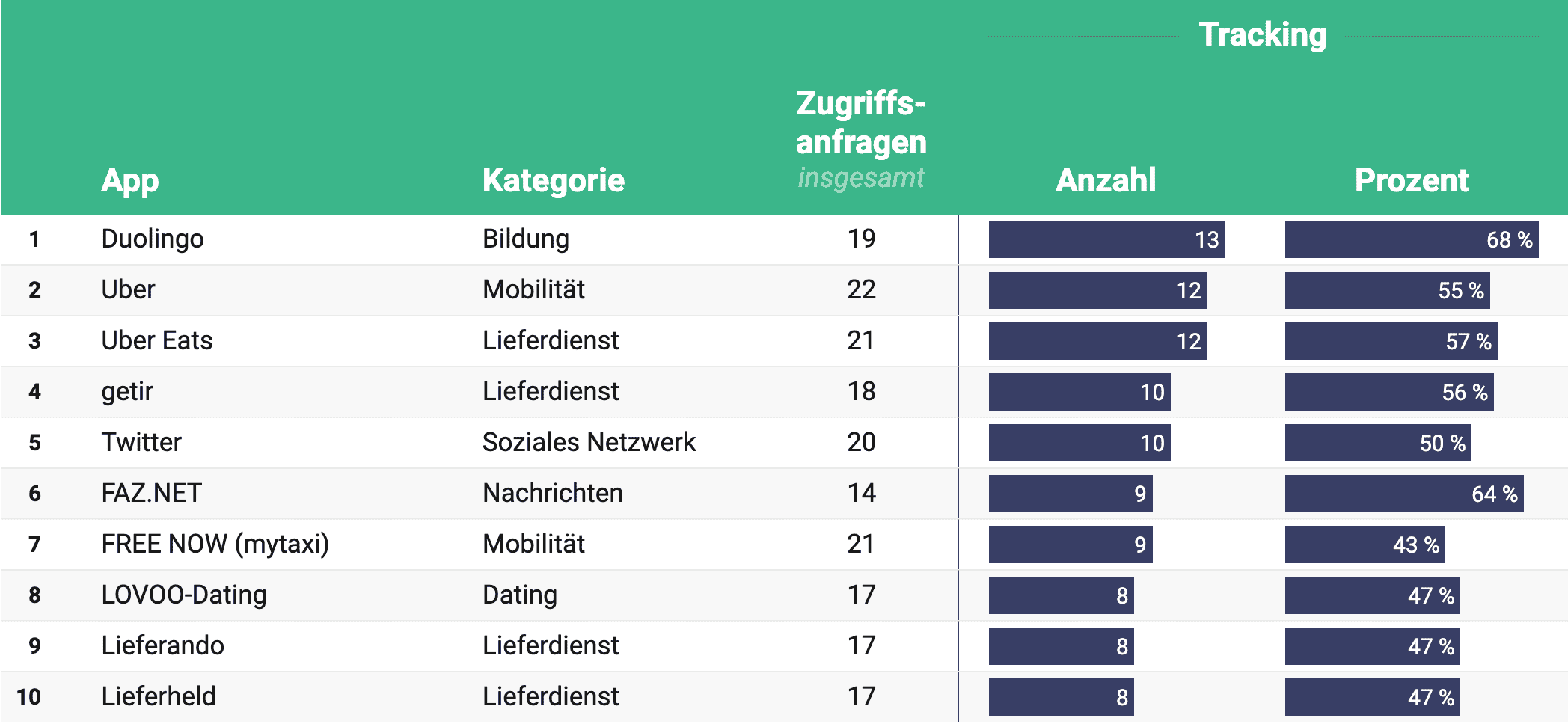
A request to access our location is not automatically negative. For transport and delivery apps, such as Uber or Lieferando, the request is essential to deliver the service. For other applications, knowing the exact location seems irrelevant to their function. That raises questions. Some apps even use tracking to monitor our activities beyond the app itself, on other apps and websites. Duolingo tops the list: the language learning app makes 19 access requests, 68 percent of which are used for tracking, in some cases beyond the app.
These Apps Use Data for Their Own Advertising Purposes
Created with Datawrapper
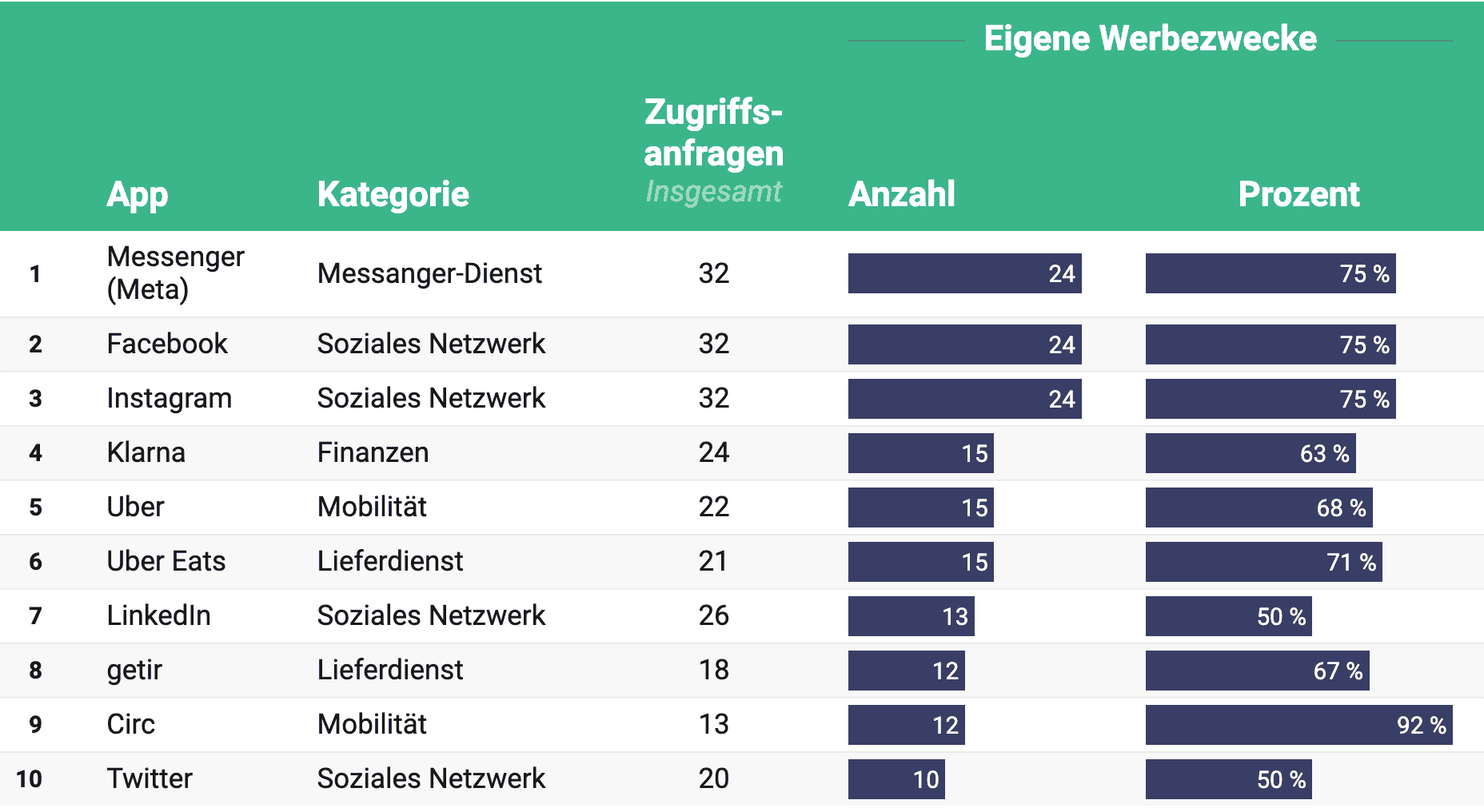
Companies also generate revenue from free-to-use apps by using them as a venue for their own marketing activities. In this area, too, the Meta apps Messenger, Facebook, and Instagram top the list. 75 percent of their access requests involve tracking for internal advertising purposes. The mobility platform Circ uses almost 92 percent of its access requests for its own marketing. Among dating apps, LOVOO is the app that uses our personal data most frequently for its own advertising.
The Most Data-Hungry Dating Apps
Created with Datawrapper
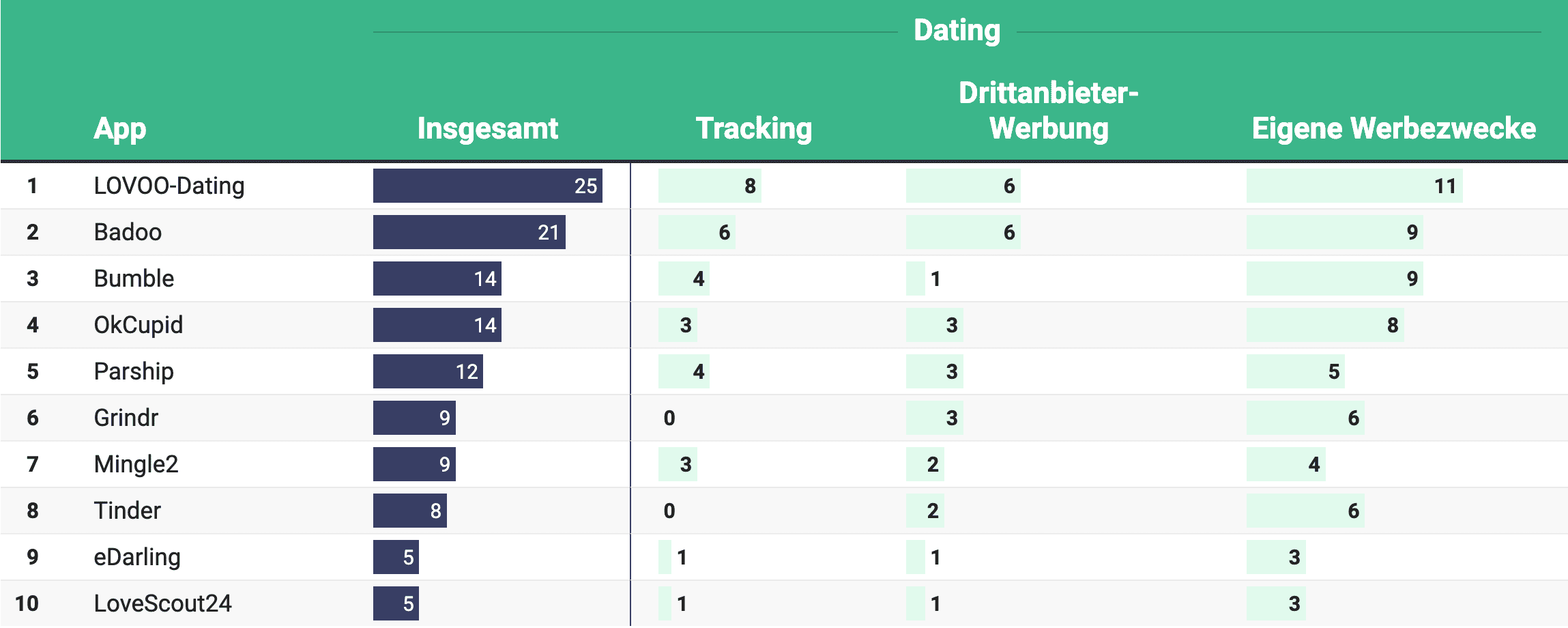
Overall, LOVOO is the most data-hungry dating app, with 25 private data points used either for tracking, third-party advertising, or internal marketing purposes. At the other end of the spectrum are eDarling, LoveScout24, and also Tinder, which are less data-hungry. This makes them well suited for those looking for love without selling their privacy.
Monetizing Health: The Data Collectors Among Mental Health Apps
Created with Datawrapper
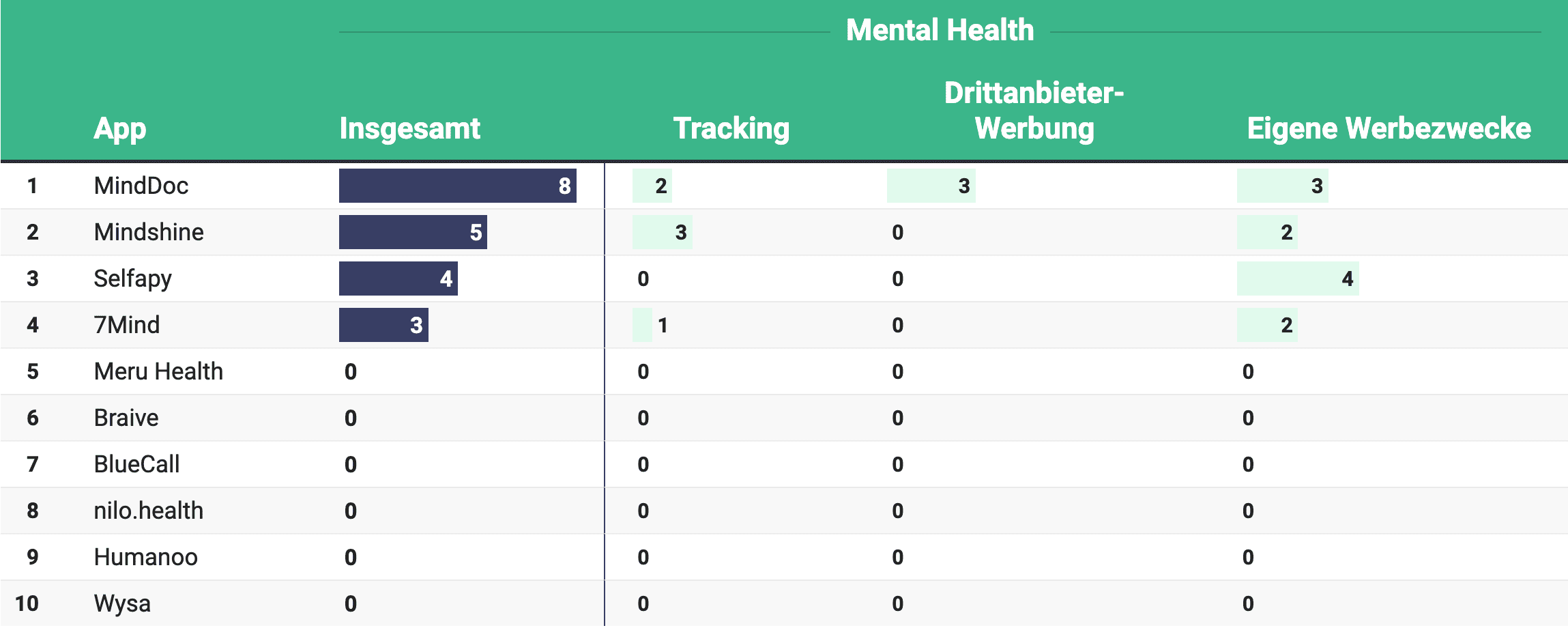
According to the WHO, depression was diagnosed about 25 percent more frequently in the first year of the pandemic. This has led to a wave of new apps designed to help people improve their mental health. An uncomfortable fact is that some mental health apps, such as MindDoc, state in the App Store that they may sell our personal data to third-party advertisers. On a positive note, no other mental health app on our list does the same. Health data is among the most sensitive data people can share.
The Biggest Data Collectors Among Messaging Services
Created with Datawrapper
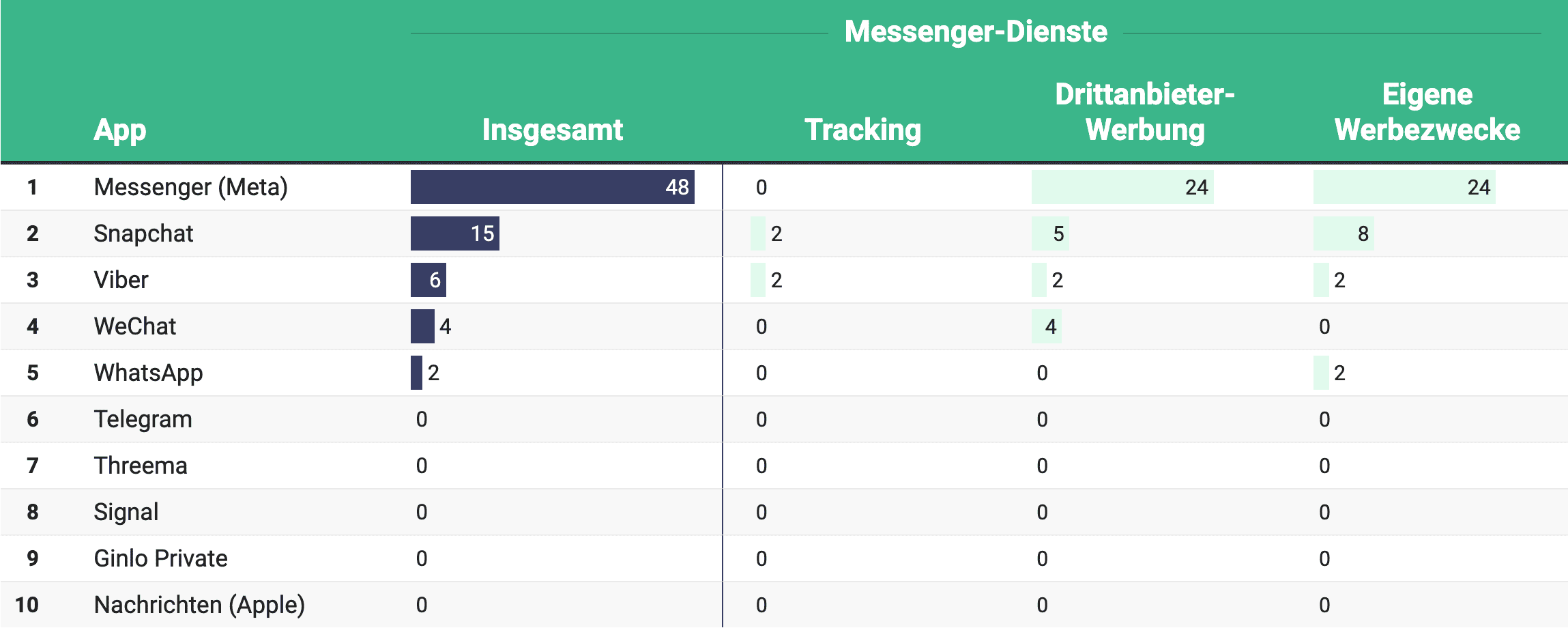
Messaging services and chats are among the most widely used smartphone apps in the world. Since their introduction, the importance of data protection in these apps has been a hot topic. Some services have even made it their mission to offer the highest level of data protection and have become known for it. These include, for example, the app Signal, which does not request any personal data. In contrast, other services, such as Meta's Messenger and Snapchat, continue to use private data for tracking and advertising purposes.
Social Media: Sharing Photos and Private Data Along With Them
Created with Datawrapper
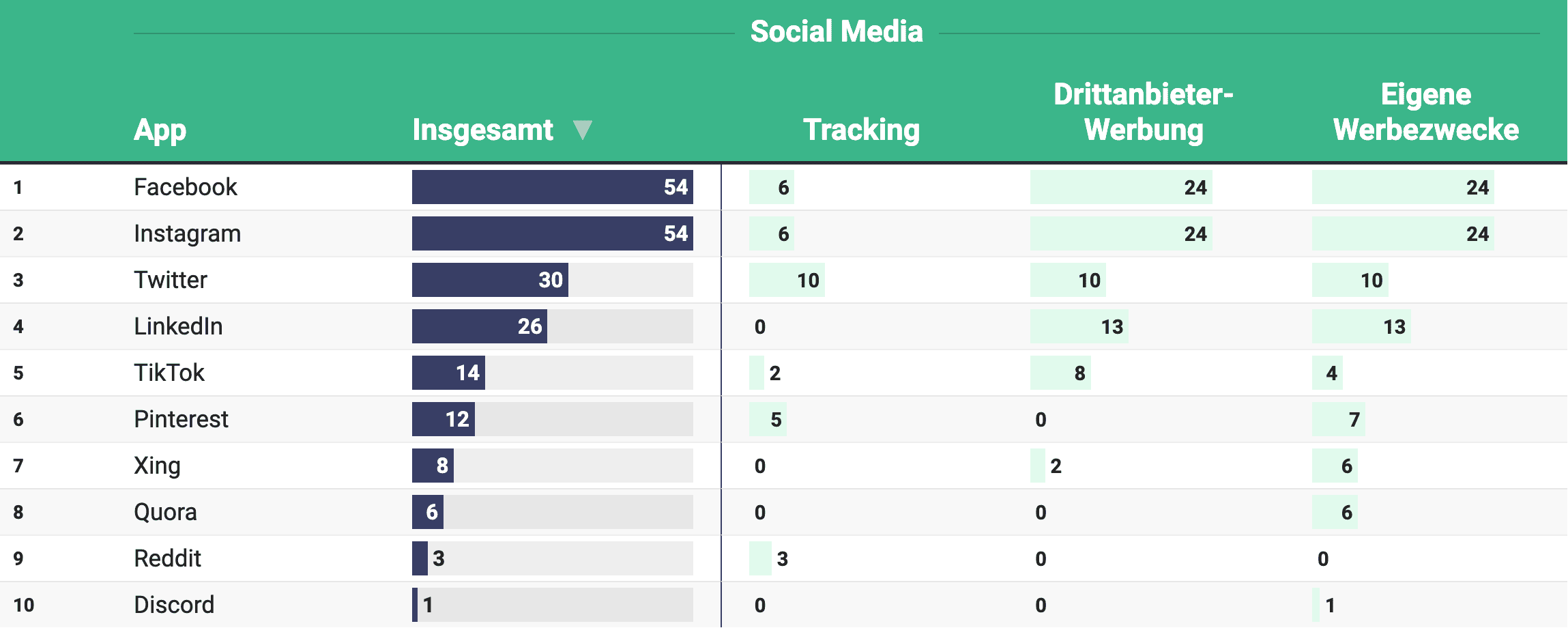
Social networks like Facebook and Instagram are extremely successful at monetizing our personal data. Because they collect so much information about us (a total of 54 personal data points each), these platforms have become gigantic marketing machines. The extensive user details that the operators of these social networks capture and cleverly market generate billions in revenue. By contrast, Discord, Reddit, and Quora also consider themselves social networks. These providers' apps are far less invasive when it comes to tracking or selling personal data.
The full list of results for all 126 analyzed apps from the Apple App Store can be found here.
First, 126 popular free apps for the iOS operating system were researched (as of June 2022). As part of a major data protection initiative by Apple, every app developer or provider is required to disclose the following privacy information:
- The number of permission requests made to access our personal data (for example, to access our purchase or search history)
- Information about which data is used for tracking purposes
- Information about which data is used for third-party advertising purposes
- Information about which data is used for advertising or marketing by the app developer itself
All of the above points were analyzed for all selected apps. Finally, the apps were ranked according to the extent to which our personal data is used for tracking, third-party advertising, and the developer's own marketing or advertising (from highest to lowest).