Why Data Protection Is Especially Important for Tax Firms
Tax advisors process large amounts of personal and highly sensitive information — including contact details, income data, tax identification numbers, employee data, and other confidential client information. The requirements for documentation, security, and confidentiality are correspondingly high.
What's more, data protection authorities don't just look at individual documents during audits. They expect a coherent overall system: processing activities must be recorded, clients informed, service providers bound by contract, and security measures documented. This also includes the firm's website, the cloud solutions in use, and internal training.
Organizing these tasks in a structured way doesn't just reduce the risk of fines. Clear processes protect client data, ease the load on your team, and strengthen clients' trust in your firm's professionalism.
What This Whitepaper Covers
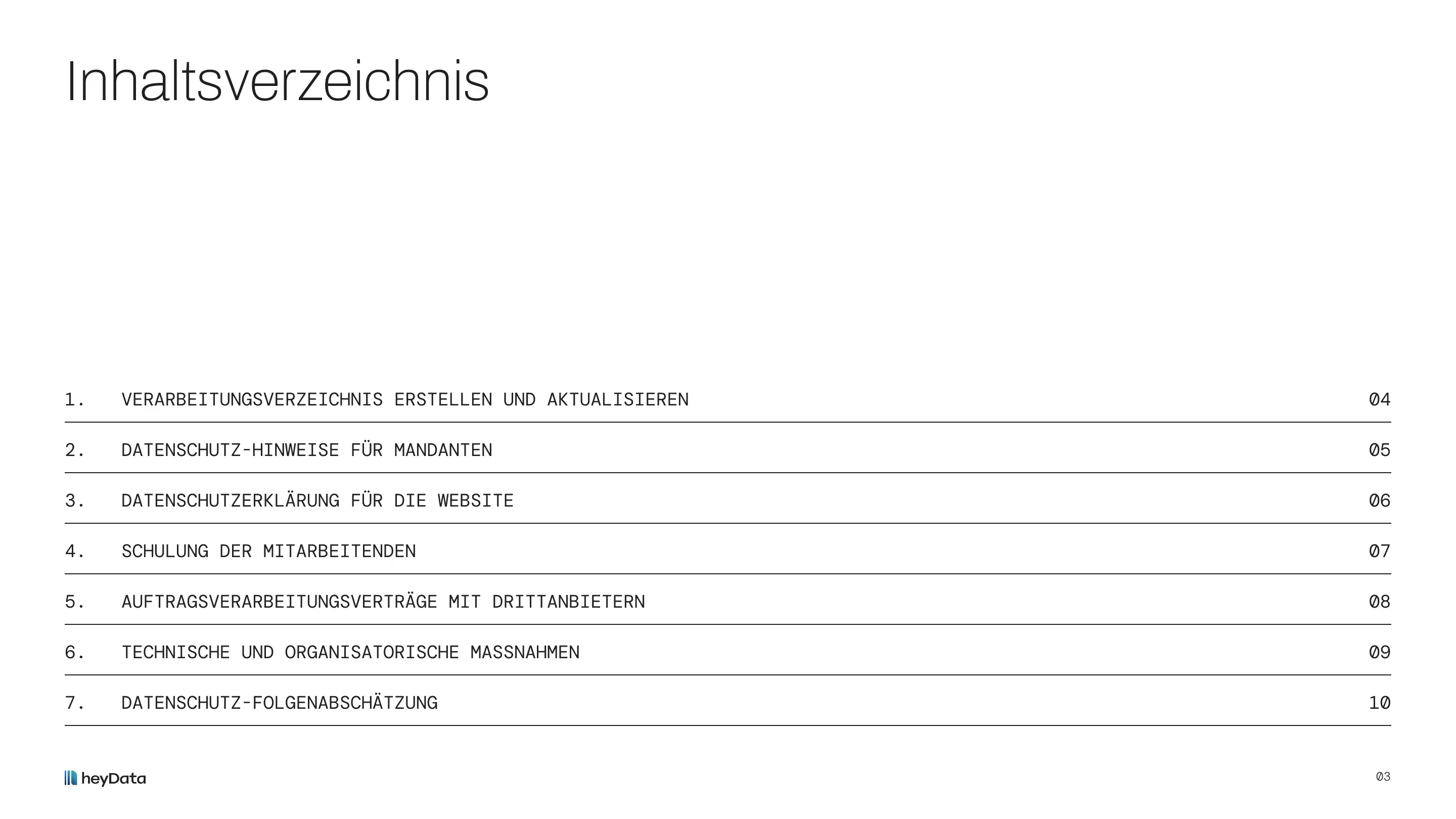
- Chapter 1: Create and maintain a Record of Processing Activities — How to properly document all processing activities, data categories, recipients, and retention periods
- Chapter 2: Data protection notices for clients — What information clients must receive at the start of the engagement
- Chapter 3: Privacy policy for your website — What to consider for contact forms, newsletters, job postings, cookies, and analytics tools
- Chapter 4: Train employees — How to raise your team's awareness of handling confidential client data securely
- Chapter 5: Data Processing Agreements with third-party providers — When contracts with IT, SaaS, and cloud providers are required
- Chapter 6: Technical and organizational measures — Which safeguards your firm needs and how to document them in a traceable way
- Chapter 7: Data Protection Impact Assessment — When particularly high-risk processing activities require an in-depth review
"Good data protection doesn't just protect client data. It creates clear workflows, reduces liability risks, and strengthens trust in your firm."
Who Is This Whitepaper For?
This guide is for tax advisors, firm owners, managing directors, data protection leads, office managers, and IT leads in tax advisory firms.
The whitepaper is especially helpful for firms that want to review their current data protection status, complete mandatory documents, or organize responsibilities within the team more clearly.
Newly founded or growing firms will also get a practical overview of which data protection measures to consider from the start — from client onboarding to the use of external software providers.

Download the Complete Data Protection Checklist Now
11 pages of practical insights for tax firms — covering the key tasks around your Record of Processing Activities, client information, website, service providers, security measures, and DPIA.

Conclusion
Data protection in a tax firm consists of many interconnected tasks. An up-to-date Record of Processing Activities alone isn't enough. Clients must be informed transparently, employees trained regularly, and external service providers carefully vetted.
Just as important are a complete privacy policy for your website, appropriate Data Processing Agreements, and documented technical and organizational measures. For particularly high-risk processing activities, you also need to check whether a Data Protection Impact Assessment is required.
The key is not to treat these requirements as a one-off documentation task. Processes, systems, and service providers change constantly — and so do your firm's data protection obligations. If you review and document data protection regularly, you protect sensitive client data and create a reliable foundation for everyday firm operations.