HR technology companies play an important role in the digital transformation of human resources, offering tools for recruitment, payroll, benefits, and employee management.
These platforms process large amounts of personal data, often including sensitive information such as health data, salary details, background checks, and diversity metrics.
With the General Data Protection Regulation (GDPR) in force, HR technology providers must ensure that their systems and processes are fully compliant. GDPR compliance is not just a legal requirement — it is also essential for maintaining customer trust, protecting the rights of employees and applicants, and avoiding heavy fines.
Non-compliance can lead to regulatory investigations, heavy fines (up to 20 million euros or 4% of global annual revenue), and significant reputational damage. For companies handling employee and applicant data, the stakes are even higher. Customers expect their HR systems to be secure, transparent, and fully compliant from the start.
In this article, we show you how HR technology companies can meet GDPR requirements with practical, industry-specific steps to process personal data securely and responsibly.
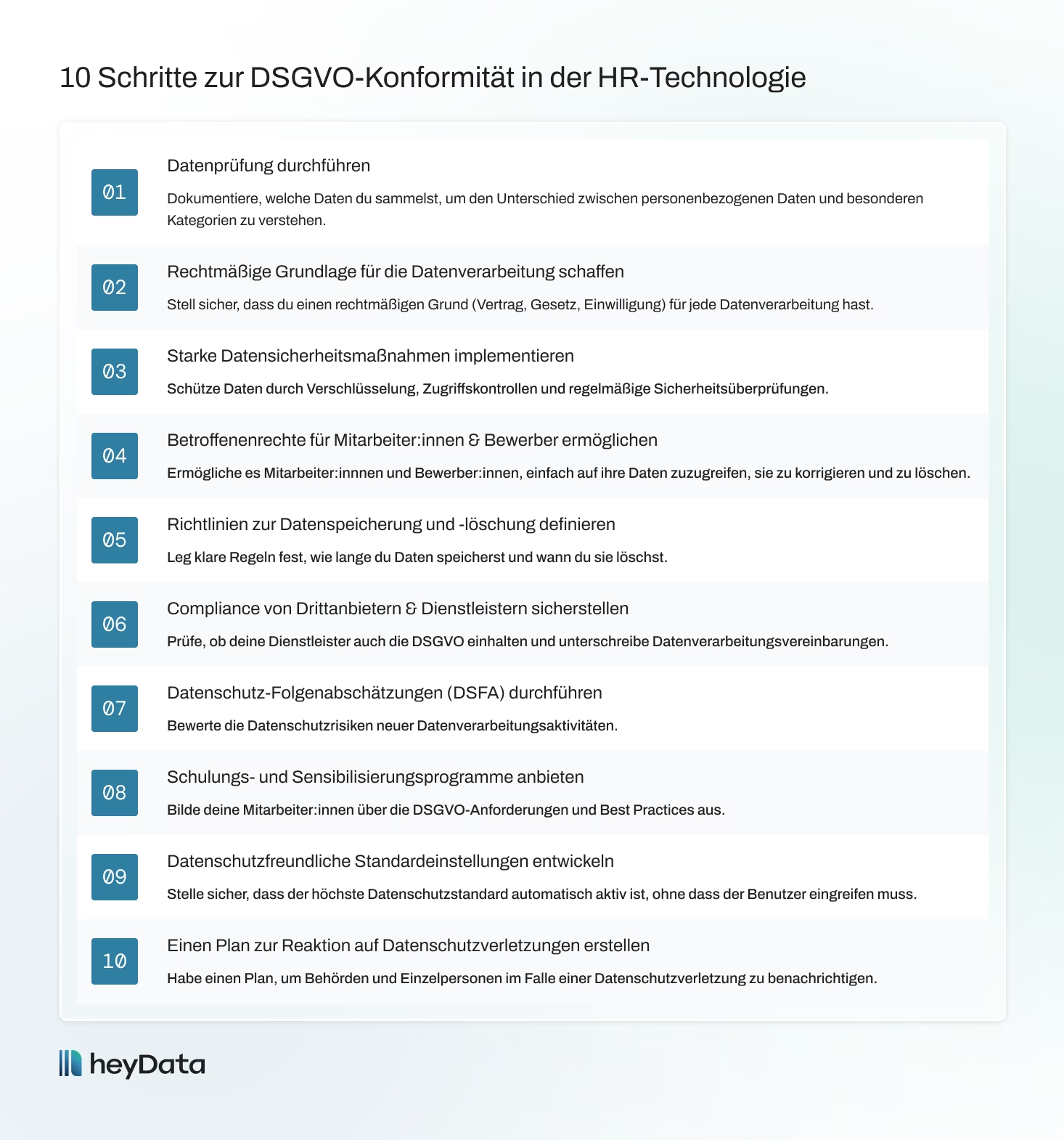
Whether you are building an applicant tracking system (ATS), an HRIS, payroll software, or an all-in-one HR suite, these steps will help you integrate GDPR compliance into the core of your product and business operations. Download the 10-step checklist at the end of the article!
1. Conduct a Data Audit
The first step to ensuring GDPR compliance in HR technology is conducting a data audit.
Start by documenting what data is collected and processed. HR platforms often process:
- Personal data: names, contact details, employment history, salary data
- Special categories of data: health data, disability status, biometric data, diversity data
It is important to understand the difference between these types of data. While all personal data must be protected under the GDPR, special categories of data are subject to stricter requirements due to their sensitivity. Processing this data typically requires a stronger legal basis, such as explicit consent or a legal obligation, and must be accompanied by additional technical and organizational safeguards, such as stricter access controls, encryption at rest and in transit, and restricted access based on job roles.
For example, storing biometric data for employee access control or collecting health data for benefits purposes involves increased risk. If handled improperly, this can have serious consequences for the individuals affected and result in significant regulatory penalties for the company.
Conducting a comprehensive data audit helps HR tech providers determine:
- Where the data comes from (job applications, internal HR processes, third-party assessments)
- Why it is collected (payroll, compliance, recruitment)
- How it flows through the systems (between modules, integrated platforms, vendors)
- Where it is stored and for how long (e.g., cloud services, data centers, archives)
Data audits should cover both structured data (e.g., database entries) and unstructured data (e.g., email attachments, uploaded documents). This is especially important in HR, where CVs, contracts, and scanned documents are commonplace.
By thoroughly auditing and classifying data accordingly, HR technology companies can implement more targeted and effective protection measures.
2. Establish a Lawful Basis for Data Processing
Under the GDPR, every data processing activity must have a clear legal basis.
For HR technology companies, the most relevant legal bases are:
- Contractual necessity — Necessary for the performance of employment contracts. For example, salary data is processed to ensure employees are paid correctly.
- Legal obligation — Required to meet legal requirements such as keeping tax records or complying with labor laws.
- Legitimate interest — Refers to using data to pursue legitimate business interests, such as analyzing HR metrics for workforce optimization.
- Explicit consent — Particularly relevant in scenarios such as conducting background checks, where candidates must give their explicit consent before their data is processed.
Each type of data may require a different basis, and the platform must be able to handle and document these differences. For example, applicant data collected during a job application may initially be based on legitimate interest or consent. However, if the applicant is hired, the legal basis shifts to contractual necessity and legal obligation.
Employers also rely on HR software to ensure compliance. It is therefore important that the platform offers transparency and configurability.
Your system should therefore be designed to separate multiple legal bases and document them, storing the relevant consents and justifications for each type of data. The system should also flag data that lacks a valid basis and restrict further processing until compliance is ensured.
3. Implement Strong Data Security Measures
Given the sensitivity of HR data, robust data security is non-negotiable.
Protecting employee and applicant data involves several key strategies:
- Encryption to protect data both at rest and in transit, preventing unauthorized access during storage and transmission
- Access controls, such as role-based permissions, to limit data exposure based on job responsibilities and ensure that only authorized employees can view or edit information
- Regular security audits, including penetration testing and vulnerability assessments, to identify potential security gaps before they can be exploited
- Secure authentication, including multi-factor authentication (MFA) for all admin users
Companies must implement security by default, meaning the highest level of data protection is active without user intervention. This includes secure default settings for data access, password policies, and audit logs.
A data breach response plan is another important security measure that must be put in place.
In the event of a data breach, the GDPR requires a report within 72 hours by notifying the supervisory authority. In addition, the affected individuals must be informed without undue delay to minimize potential harm.
Data breach response plans should be in place and tested regularly. HR tech platforms should also enable customers to quickly assess which data may have been exposed and automate notification workflows.
A clearly defined incident response plan can also be a selling point for your software, as customers increasingly look for providers that proactively manage risks and minimize potential threats.
4. Enable Data Subject Rights
Employees and applicants whose data is processed on HR technology platforms are entitled to exercise their GDPR rights.
These include:
- Right of access — viewing the HR and recruitment data stored about them
- Right to rectification — correcting outdated or inaccurate personal data
- Right to erasure — requesting the deletion of personal data once it is no longer needed
- Right to restriction of processing — suspending data use while a dispute is being resolved
- Right to data portability — receiving a structured, machine-readable copy of their data to transfer to another employer or system
- Right to object — particularly relevant for data processed on the basis of legitimate interest
HR tech platforms must make it easy for their users (e.g., HR teams) to respond to these requests quickly — within the one-month deadline set by the GDPR. This includes verifying the identity of the requester, checking the scope of the data, and fulfilling the request securely.
Integrating an intuitive dashboard or API for rights requests can therefore significantly improve usability and reduce friction for your customers.
Since many HR tech platforms now offer AI-powered tools for CV screening or initial candidate assessments, it is important to address the additional considerations involved.
The GDPR prohibits fully automated decisions that significantly affect individuals without human involvement and emphasizes the need for accountability. Applicants have the right to object and request human review if they are rejected as a result of AI-driven screening processes. This ensures fairness and transparency in recruitment.
For this reason, your HR tech platform must include the following features:
- Mechanisms for human review
- Provision of logs of automated decisions
- The ability for users to challenge or override AI-generated results
If used improperly, AI tools can expose both your HR tech company and your customers to significant compliance risks.
5. Establish Data Retention and Deletion Policies
The GDPR stipulates that personal data must not be kept longer than necessary. HR tech providers must establish and enforce data retention policies based on:
- Legal obligations — Certain employment and financial records must be retained to comply with tax laws, labor regulations, or social security reporting requirements. These legal requirements take precedence and often set minimum retention periods. For example, payroll records must be kept for 5–10 years, depending on the country or jurisdiction.
- Business requirements — Some data is retained for operational purposes, such as conducting employee evaluations, facilitating internal mobility, or managing ongoing disciplinary proceedings. But even in these cases, data must not be stored indefinitely.
- User consent — If an applicant agrees to be considered for future positions, their data may be stored beyond the immediate application process. Consent must be freely given, informed, and revocable, and retention must be limited to a defined, reasonable period.
Since manual processes are error-prone and do not scale, your platform should offer automated deletion workflows to ensure that outdated or unnecessary data is removed securely and on time.
Retention settings should, however, be transparent and customizable. Add automatic notifications for HR teams before data is due for deletion.
6. Ensure Third-Party and Vendor Compliance
HR tech platforms rarely operate in isolation.
Most rely on a network of third-party providers, such as benefits providers, payroll processors, cloud storage platforms, and analytics tools, which also process personal data.
Under the GDPR, these third parties are classified as data processors, and the HR technology company engaging them acts as the data controller and remains ultimately responsible for breaches or non-compliance.
This means that even if a data breach or violation originates with a vendor, the HR tech company can face penalties and reputational damage. Vendor management is therefore not just a task for procurement or IT — it is a key part of GDPR compliance.
To ensure that third-party and vendor relationships meet GDPR requirements, HR tech companies should do the following:
- Sign Data Processing Agreements (DPAs) with all sub-processors to clearly define roles, responsibilities, and safeguards.
- Vet third-party providers for GDPR compliance, paying particular attention to their data security practices, breach notification procedures, and data storage policies.
- Maintain a central, up-to-date list of all sub-processors and make it accessible to customers who need transparency for their own compliance obligations.
- Introduce a vendor risk management program that includes regular audits, compliance checks, and the ability to terminate contracts if standards are not met. For HR technology platforms looking to streamline this process, heyData's Vendor Risk Management solution offers structured support for assessing and monitoring third-party compliance.
Many HR platforms also rely on US-based services, such as cloud infrastructure providers or payroll integrations. Since the GDPR restricts the transfer of personal data outside the European Economic Area (EEA) to countries without an adequate level of protection, using these services often requires additional legal measures, such as Standard Contractual Clauses (SCCs) or assessing compliance with frameworks such as the EU-US Data Privacy Framework.
To maintain compliance, you need to actively monitor legal developments and keep your vendor strategy flexible. If a framework is invalidated (as happened with the Privacy Shield), HR technology companies must be able to adapt their data transfer mechanisms without disruption.
7. Conduct Data Protection Impact Assessments (DPIAs)
Data Protection Impact Assessments (DPIAs) are a core requirement of the GDPR whenever data processing activities are likely to pose a high risk to the rights and freedoms of individuals.
In practice, a DPIA is a structured process that helps companies evaluate the potential impact of their data processing operations on individuals' privacy. It typically involves mapping data flows, assessing the necessity and proportionality of processing operations, identifying risks, and planning strategies to mitigate them.
In HR technology, DPIAs are particularly relevant due to the scale and sensitivity of the data processed. From recruitment and onboarding to performance monitoring and benefits administration, HR tech platforms often process highly personal data that, if mishandled, can lead to discrimination, reputational damage, or legal sanctions.
DPIAs are especially important in the following scenarios:
- Employee monitoring tools — Systems that track productivity, capture keystrokes, or use biometric access controls have a direct impact on employee privacy and must be assessed for proportionality and necessity.
- AI-powered recruitment — Automated CV screening and candidate ranking can influence hiring outcomes. These systems must be assessed for fairness, transparency, and accountability.
- Large-scale processing of sensitive data — Collecting and analyzing health data for employee benefits or wellness programs often involves special categories of data that carry increased risks.
A well-structured DPIA should:
- describe the data processing activity, its scope, and its objectives
- assess whether the processing is necessary and proportionate
- identify potential risks to the rights and freedoms of data subjects
- recommend technical and organizational measures to minimize or eliminate these risks.
One of the biggest challenges for HR tech companies is striking a balance between workplace transparency and employee privacy. While tools for monitoring or evaluating employee performance can offer operational benefits, they can also be perceived as invasive. A DPIA helps ensure that any monitoring is justified, limited in scope, and accompanied by clear safeguards. By building DPIA templates or workflows into your platform, you can help your customers carry out their assessments effectively and demonstrate their shared responsibility for GDPR compliance.
Conducting a DPIA is not just a legal requirement — it is also a practical risk management tool. It encourages foresight in system design and builds trust with all stakeholders, including customers, employees, and supervisory authorities.
8. Implement Privacy by Design
The GDPR requires companies to build data protection into their systems from the ground up. For HR technology, this means embedding compliance features directly into the software architecture.
For HR tech platforms, this includes:
- Data minimization features, such as anonymizing or pseudonymizing applicant data once a position has been filled
- Granular consent management that separates optional data from necessary processing
- Custom access controls that ensure users can only access the data they need for their role
- Audit logs that track who has accessed or modified personal data
- Privacy settings that default to the highest level of protection
By building data protection into the platform itself, you can help customers stay compliant effortlessly while reducing your own liability.
However, since HR regulations vary from country to country, HR platforms need to be flexible and allow companies to configure settings for local compliance requirements. For example, data retention laws in Germany differ significantly from those in the UK or the US.
9. Appoint a Data Protection Officer (DPO)
Under the GDPR, appointing a Data Protection Officer (DPO) is mandatory if the company:
- Carries out large-scale processing of special categories of data
- Systematically monitors individuals (e.g., employee activity, performance monitoring)
HR technology companies are particularly likely to meet one or both of these criteria. Given the nature of their software, which is often used to manage payroll, analyze employee performance, or monitor attendance, they frequently process large amounts of sensitive data. In addition, features such as time tracking, productivity monitoring, or biometric access controls may constitute systematic monitoring within the meaning of the GDPR.
The responsibilities of a Data Protection Officer include:
- Monitoring GDPR compliance
- Conducting audits and risk assessments
- Advising internal stakeholders on data protection
- Acting as the point of contact for data protection authorities and data subjects
DPOs help ensure that compliance is not an afterthought but an integral part of your product and operations. A DPO can provide strategic advice, oversee risk assessments, and assist with complex scenarios such as cross-border data transfers or AI-powered recruitment tools.
However, it can be difficult for smaller HR technology companies to justify a full-time DPO. In these cases, they can outsource the role to an external compliance expert or law firm, provided there is no conflict of interest.
Providers such as heyData offer experienced external DPO services tailored to your needs, helping you stay compliant without the cost of hiring full-time staff. External data protection officers bring expertise in data protection law and industry best practices and can review your platform's features, data flows, and documentation to ensure the software complies with the GDPR — especially in complex areas such as AI-powered recruitment, employee monitoring, or cross-border data transfers. They can also help conduct Data Protection Impact Assessments, manage data breach notifications, and represent your company before supervisory authorities.
10. GDPR Training and Awareness
Even the best-designed HR tech platform can fail if internal teams lack sufficient knowledge of the GDPR. Training is crucial to prevent accidental data misuse and ensure a compliance-oriented culture.
There are two key levels of training and awareness to consider: your internal team and your customer-facing features that help HR departments stay GDPR-compliant. While these features are not strictly required, they can significantly enhance your value proposition. By supporting your customers' compliance needs out of the box, your platform can stand out from the competition and become a trusted partner in data protection.
When it comes to internal training, your development, product, and support teams need to understand how the GDPR affects the design and operation of your platform. This includes, among other things:
- What are personal data and special categories of data?
- How can privacy by design and by default be implemented?
- How should security incidents and data subject requests be handled?
Regular GDPR training helps align your team with your compliance goals and reduces the risk of unintentional violations.
Customers using your HR tech software also need support in handling employee and applicant data responsibly. While you are not legally responsible for their compliance, you can provide them with helpful tools and guidance. Consider the following:
- Compliance toolkits and training materials for HR departments using the platform
- Built-in GDPR guidance, such as tips for setting retention rules or templates for DPIAs
- Onboarding checklists and reminders for customers to configure their privacy settings and DPAs
These initiatives not only support your customers but also increase the value of your platform. You can also consider partnering with an external provider such as heyData to offer professional GDPR training solutions.

Don't miss an update.
New laws, deadlines, and practical tips delivered straight to your inbox – once a month, no spam.
Conclusion
HR technology companies operate in a sensitive and heavily regulated environment. Unlike general SaaS providers, HR tech platforms process employee and applicant data that is often highly personal and legally protected.
Ensuring GDPR compliance for HR technology means going beyond general best practices. It requires careful data classification, clearly defined legal bases, robust security, and the flexibility to accommodate different labor laws and data protection requirements.
A proactive approach to compliance protects your company from legal risks while building long-term trust with employers and employees. With regulatory scrutiny increasing in the EU and worldwide, HR technology providers need to stay ahead by embedding compliance into their products, processes, and company culture.
Seamlessly integrating GDPR safeguards into your HR platform can help you achieve these goals efficiently and securely.
That's why heyData already offers 40 software integrations with industry-leading HR management platforms such as Google Workspace, Azure Active Directory, Microsoft Dynamics 365, Okta, Personio, BambooHR, and Workday.
With heyData, existing HR systems can be integrated effortlessly, eliminating the need for manual data entry and significantly reducing the risk of human error. Adding or removing employees becomes a streamlined, automated process that saves your team time and paves the way for advanced features such as employee training and document management.
These integrations are not just about convenience — they are designed for security and GDPR compliance. By connecting directly to leading platforms such as Personio, BambooHR, and Workday, heyData helps you manage employee data efficiently, securely, and in full compliance with legal standards.
Data Protection in HR: GDPR Guide for HR Teams | heyData
Learn how HR teams process applicant and employee data in a GDPR-compliant way — including ROPA, TOMs, DPIAs, DPAs, and the EU AI Act.

Free & no obligation
FAQ
What is a DPIA in HR technology?
What is a DPIA in HR technology?
A Data Protection Impact Assessment (DPIA) is a process for identifying and minimizing data protection risks when processing high-risk data, such as large-scale monitoring of employees.
What are the penalties for non-compliance with the GDPR?
What are the penalties for non-compliance with the GDPR?
Companies can face fines of up to 20 million euros or 4% of their global annual turnover, as well as reputational damage and business disruptions.