Why Data Protection Matters So Much in HR
Hardly any other business function processes as much personal and sensitive information as HR. Application documents, personnel files, salary data, working hours, sick notes, and performance information often accompany employees throughout the entire employee lifecycle.
This data comes from a wide range of sources: career pages, application platforms, LinkedIn outreach, referrals, HR software, and external service providers. Every processing activity needs an appropriate legal basis, clearly defined purposes, and adequate safeguards.
Automated systems and AI-powered HR tools create additional challenges. When applications are analyzed, candidates are ranked, or performance is monitored, the requirements of the EU AI Act may apply alongside the GDPR. Organizing data protection, information security, and AI compliance together doesn't just protect data subjects — it creates reliable and fair HR processes.
What This Whitepaper Covers
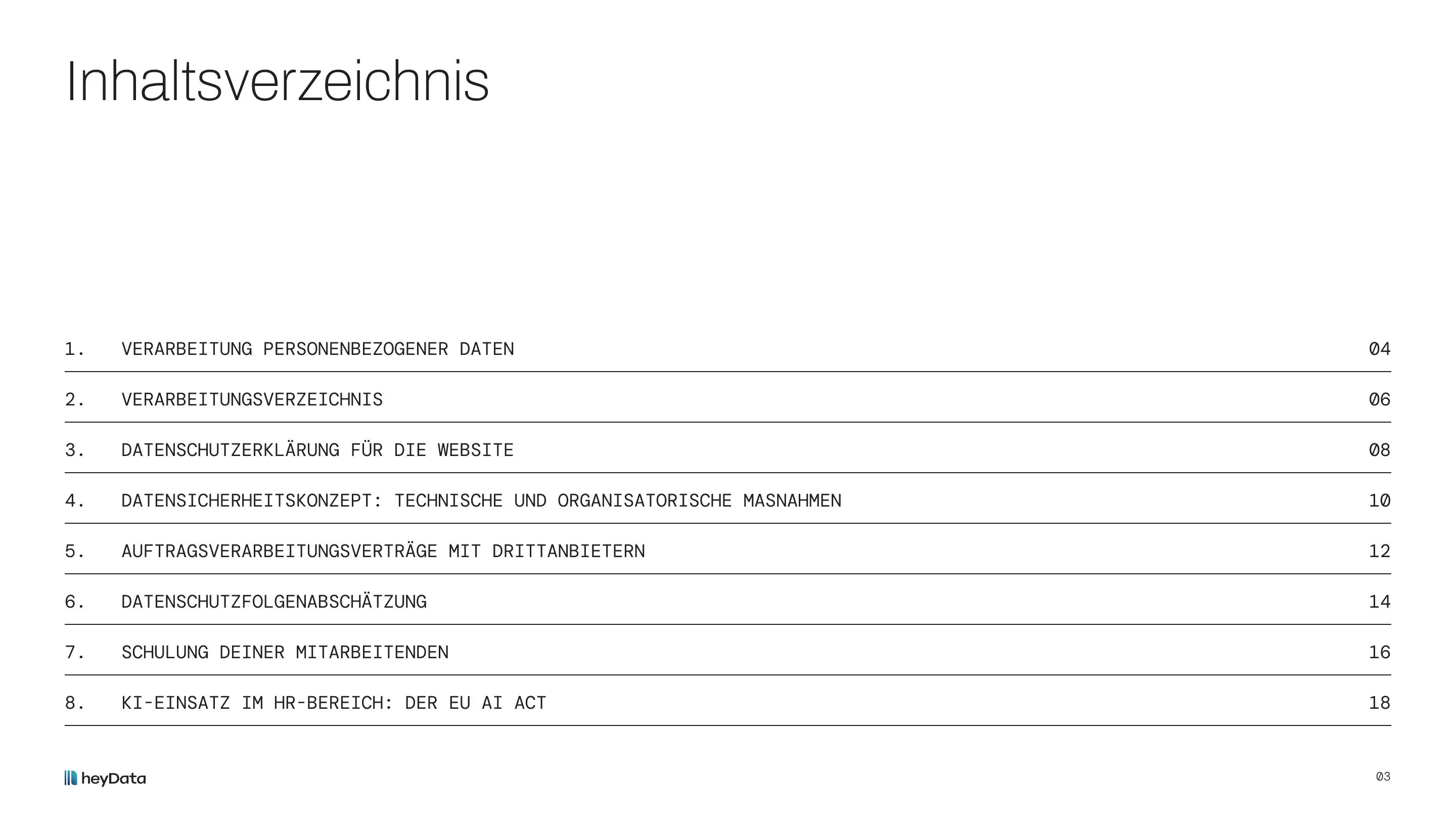
- Chapter 1: Processing personal data — Which legal bases apply to applicant, employee, and customer data
- Chapter 2: Record of Processing Activities — How to fully document HR processes, data categories, recipients, and retention periods
- Chapter 3: Privacy policy for your website — What to consider for career pages, contact forms, job postings, cookies, and international data transfers
- Chapter 4: Data security concept and TOMs — How to define technical and organizational safeguards and document them clearly
- Chapter 5: Data Processing Agreements with third-party providers — When contracts with recruiting, SaaS, cloud, and IT providers are required
- Chapter 6: Data Protection Impact Assessment — When automated HR processes, HR software, or monitoring capabilities require an in-depth risk assessment
- Chapter 7: Training your employees — How regular trainings, work-from-home rules, and BYOD agreements prevent data breaches
- Chapter 8: Using AI in HR — Which HR systems can qualify as high-risk AI and what obligations the EU AI Act sets out
"Good data protection in HR doesn't create more bureaucracy — it creates clear rules for fair, secure, and transparent HR processes."
Who Is This Whitepaper For?
This guide is aimed at HR leads, HR managers, recruiters, People & Culture teams, managing directors, data protection officers, and IT managers.
The whitepaper is especially helpful for companies that use applicant tracking systems, digital personnel files, cloud software, or AI-powered recruiting and performance tools.
Growing teams also get a clear overview of the foundations they need for GDPR-compliant HR processes — from the first contact with applicants to managing and training existing employees.

Download the complete data protection guide for HR now
20 pages of practical knowledge on applicant and employee data, your Record of Processing Activities, website, TOMs, DPAs, DPIAs, employee training, and the EU AI Act.

Conclusion
Data protection in HR starts with a simple question: which data is processed for which purpose — and on which legal basis? Only once these fundamentals are clear can you sensibly define retention periods, access rights, and security measures.
An up-to-date Record of Processing Activities, documented technical and organizational measures, and appropriate contracts with external HR and software providers form the organizational foundation. Regular trainings and clear rules for working from home and private devices ensure that these requirements also work in everyday practice.
With automated systems, the need for review increases. HR software, monitoring features, and AI-powered selection processes can make a Data Protection Impact Assessment necessary. High-risk AI in HR additionally triggers requirements under the EU AI Act, such as human oversight, transparency, and a fundamental rights impact assessment.
Integrating data protection and AI compliance into your HR processes early reduces risks and creates a fair, secure foundation for modern HR work.