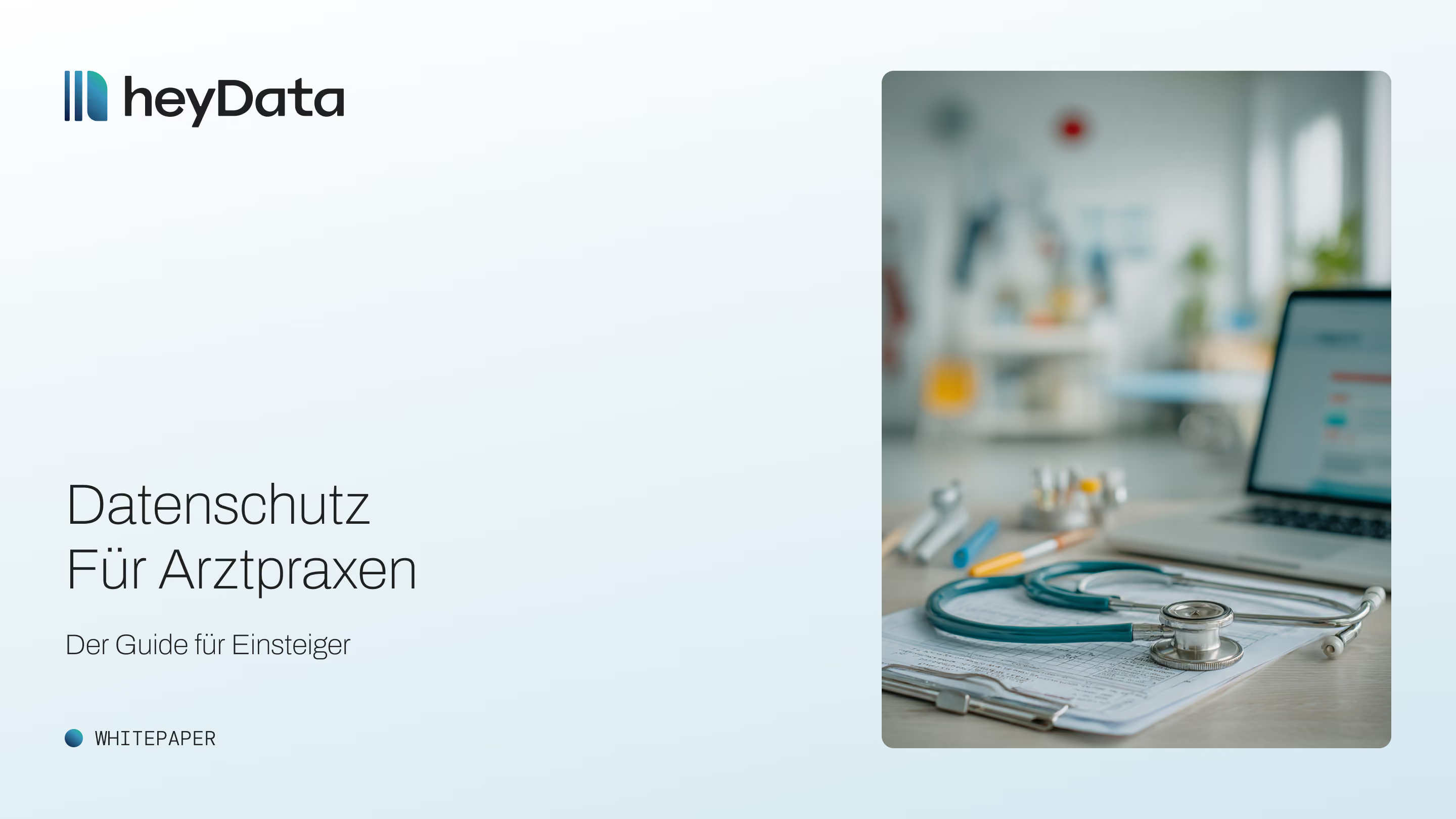
Why Data Protection Matters So Much in Medical Practices
Health data is among the most sensitive personal data there is. Medical practices process it every day — from diagnoses and treatment records to prescriptions, billing information, and contact details. The requirements for confidentiality, security, and documentation are correspondingly high.
In day-to-day practice, risks arise in many places: when exchanging data with specialists, laboratories, or pharmacies, when using appointment booking systems, when working with external IT service providers, or through your own website. Not every data transfer requires consent — but not every transfer is automatically permitted, either.
That's why you need clear processes, up-to-date mandatory documents, and a team that handles health data confidently and securely. Organizing data protection in a structured way protects patients, reduces liability risks, and lets your practice team focus on patient care.
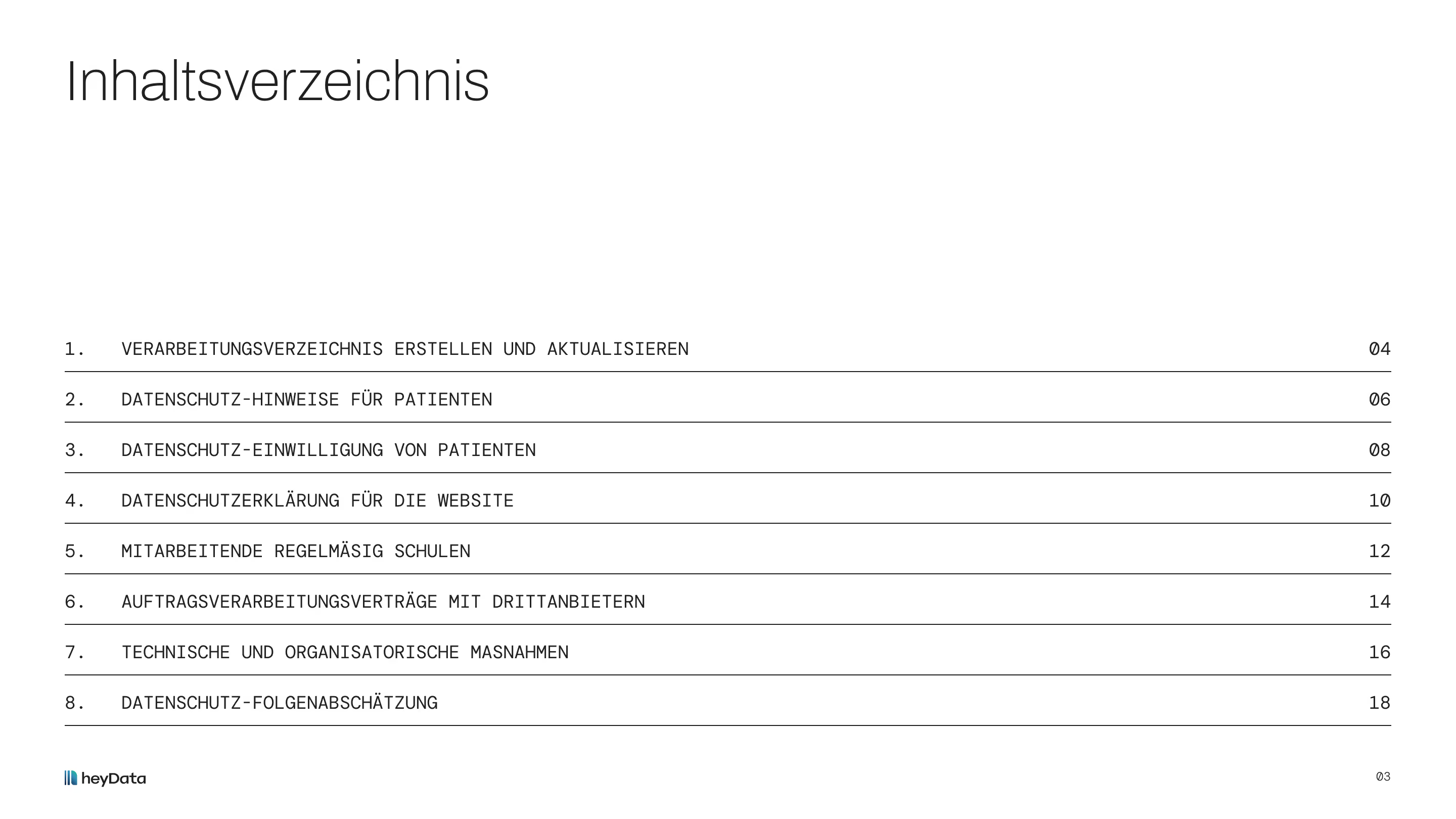
What This Whitepaper Covers
- Chapter 1: Creating and updating your Record of Processing Activities — How to document all processing activities, data categories, recipients, and retention periods
- Chapter 2: Data protection notices for patients — What information patients must receive at the start of treatment
- Chapter 3: Patient consent to data processing — When consent is required for sharing health data
- Chapter 4: Privacy policy for your website — What to consider for contact forms, newsletters, job postings, cookies, and third-party tools
- Chapter 5: Training your team regularly — How to reduce human error and build a secure data protection culture in your practice
- Chapter 6: Data Processing Agreements with third-party providers — When contracts with IT service providers, appointment booking systems, or software vendors are necessary
- Chapter 7: Technical and organizational measures — Which safeguards health data requires and how to document them
- Chapter 8: Data Protection Impact Assessment — When larger practices, group practices, and medical care centers must assess particularly high-risk processing
"Good data protection doesn't just protect health data. It creates clear processes, gives your team confidence, and strengthens your patients' trust."
Who Is This Whitepaper For?
This guide is aimed at practice owners, physicians, practice managers, medical assistants, data protection officers, and IT managers in individual practices, group practices, and medical care centers.
The whitepaper is especially helpful for practices that want to review their current data protection status, complete mandatory documents, or clarify uncertainties around consents and data transfers.
Newly founded or growing practices also get a clear overview of which data protection measures to consider from the start — from the practice management system and external service providers to your own website.

Download the complete data protection guide now
20 pages of practical knowledge for medical practices — with a checklist covering your Record of Processing Activities, patient information, consents, website, employee training, DPAs, TOMs, and DPIAs.

Conclusion
Data protection in a medical practice is far more than a privacy policy or a Record of Processing Activities created once and then forgotten. Health data is processed across many systems, people, and service providers. That's why responsibilities, legal bases, and security measures must be clearly defined.
Sharing patient data deserves particular attention. Depending on the recipient and purpose, it may be legally permitted, mandatory, or only allowed with consent. Even with online appointment booking, analytics tools, cloud solutions, and IT support, the practice remains responsible for lawful and secure processing.
Regular training, up-to-date Data Processing Agreements, and documented technical and organizational measures ensure that data protection doesn't just exist on paper. Larger practices and medical care centers should also carefully assess whether a Data Protection Impact Assessment is necessary. Maintaining data protection on an ongoing basis protects sensitive health data and creates a reliable foundation for running your practice securely.