Why Data Protection Is Crucial in Fundraising
A funding round isn't just an examination of the business model, the numbers, and the team. Investors also assess how professionally a start-up handles personal data and whether the most important data protection processes are reliably documented.
During due diligence, extensive information is often requested: business plans, financial reports, cap tables, contracts, HR information, and customer documents. As soon as these documents contain personal data, sharing them requires an appropriate legal basis. At the same time, the principle applies to only provide the information that's actually necessary for the review.
A well-structured, data-protection-compliant data room can be more than a box-ticking exercise. If you consistently anonymize unnecessary data, assess requests transparently, and prepare relevant documents completely, you demonstrate professionalism and risk awareness. That strengthens your credibility with potential investors and prevents data protection questions from delaying the deal.
What This Whitepaper Covers
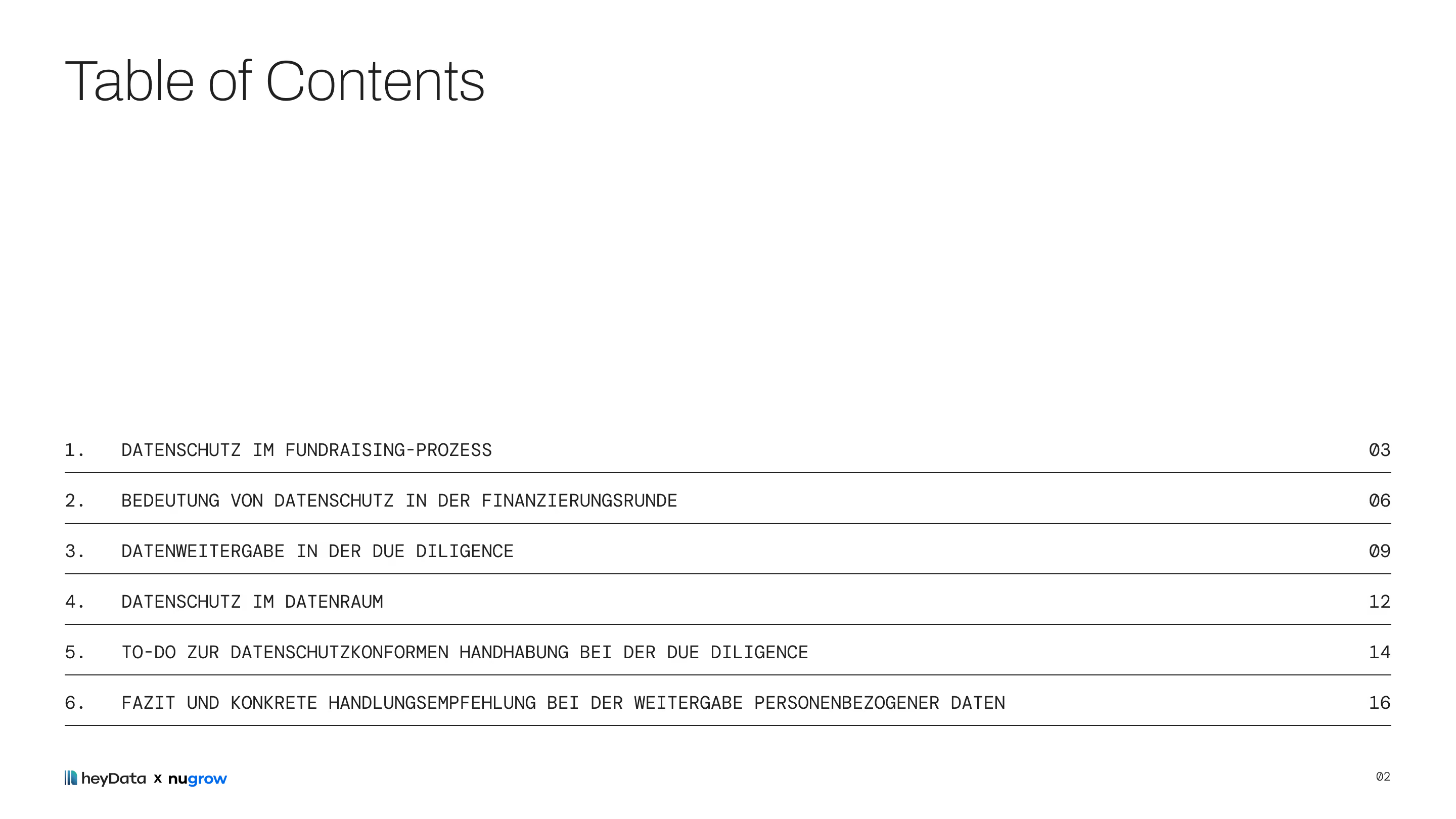
- Chapter 1: Data Protection in the Fundraising Process — Which information investors typically request and why not every request has to be fulfilled
- Chapter 2: Data Protection as Part of the Funding Round — Which documents are reviewed from pre-seed to IPO and how data protection contributes to investment readiness
- Chapter 3: Data Sharing in Due Diligence — Which legal bases come into question and why a documented balancing of interests matters
- Chapter 4: Which Data You're Allowed to Share — Founder and management data, employee information, customer contracts, and sensible alternatives
- Chapter 5: Which Data Doesn't Belong in the Data Room — Sensitive employee data, individual customer contracts, and other unnecessary personal information
- Chapter 6: Data Protection in the Data Room — How to review providers, server locations, DPF certifications, and international data transfers
- Chapter 7: Due Diligence Checklist — Legal bases, DPAs, Record of Processing Activities, TOMs, confidentiality, and information obligations
- Chapter 8: Concrete Recommendations — How to anonymize data, handle follow-up questions, and involve data protection experts effectively
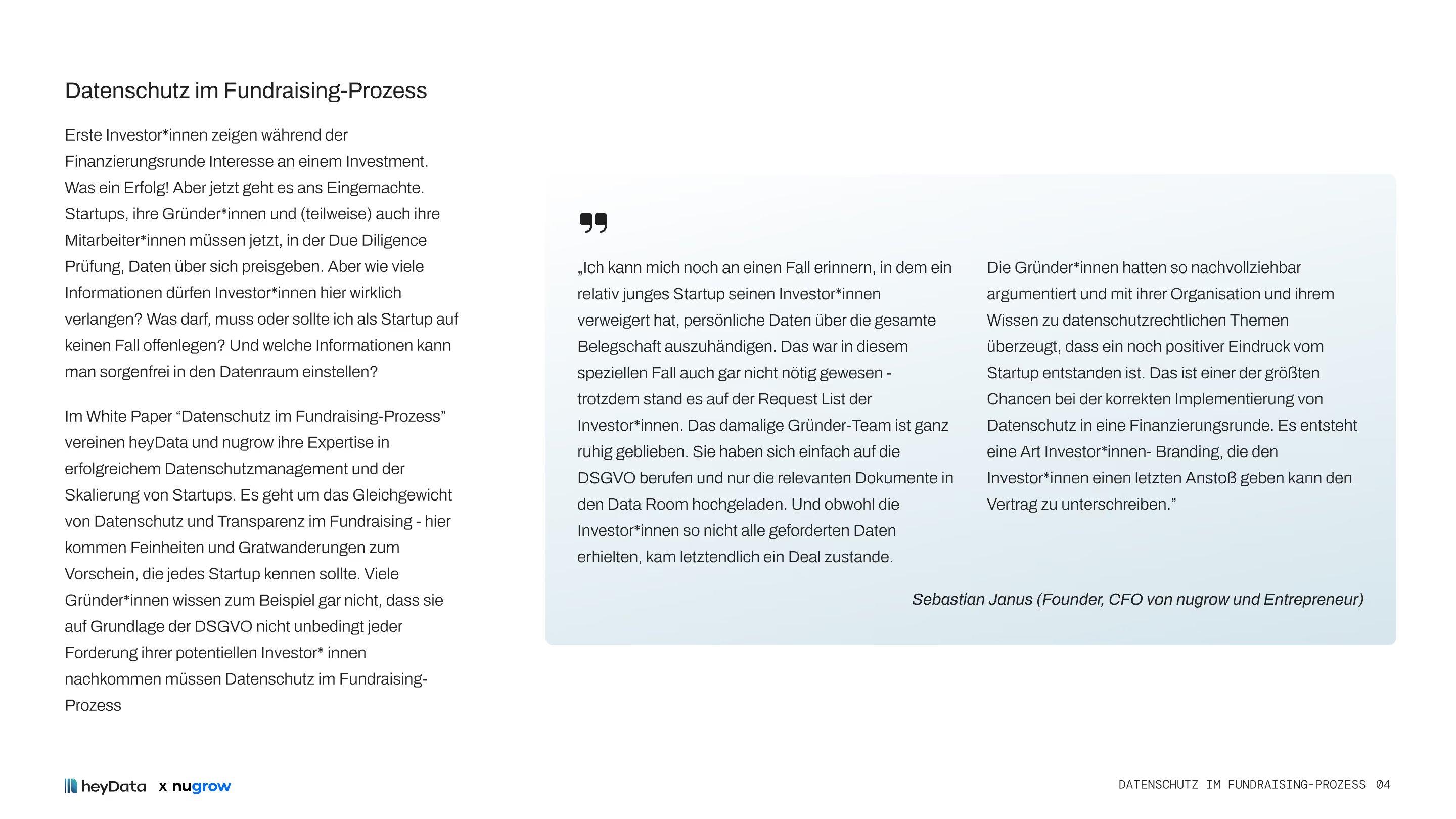
"Handling data protection professionally can become a signal of trust in fundraising — showing that your start-up stays well organized even through growth and scaling."
Who Is This Whitepaper For?
This guide is aimed at founders, managing directors, CFOs, finance leads, legal teams, operations teams, and data protection officers in start-ups and scale-ups.
The whitepaper is especially helpful for companies preparing for a pre-seed, seed, or Series A round, setting up a data room, or already facing a due diligence request list.
Teams looking to professionalize their data protection documentation ahead of a larger funding round also get a clear overview of which documents investors expect and how to provide personal data in a data-minimizing way.

Download the Full Fundraising Guide Now
18 pages of practical insights on data protection, data rooms, and due diligence — including a checklist and concrete recommendations for sharing personal data securely.

Conclusion
In fundraising, it's easy to get the impression that all requested information must be fully disclosed. From a data protection perspective, that's not the case. What matters is whether the data is genuinely necessary for the review and whether a solid legal basis exists for sharing it.
Restraint is especially important with employee and customer data. In many cases, anonymized overviews, aggregated salary information, or template contracts are sufficient. If specific personal data is needed, the decision should be documented and coordinated with data protection officers.
The technical side is just as important: the data room must be secure, access rights should be clearly limited, and international data transfers must be legally safeguarded. In parallel, data protection documents such as the Record of Processing Activities, TOMs, DPAs, and, where applicable, Data Protection Impact Assessments should be complete and up to date.
If you integrate data protection into the preparation of your funding round early, you avoid unnecessary risks and show investors that your company is professional, resilient, and ready to scale.