
Why the EU AI Act Matters for Companies Now
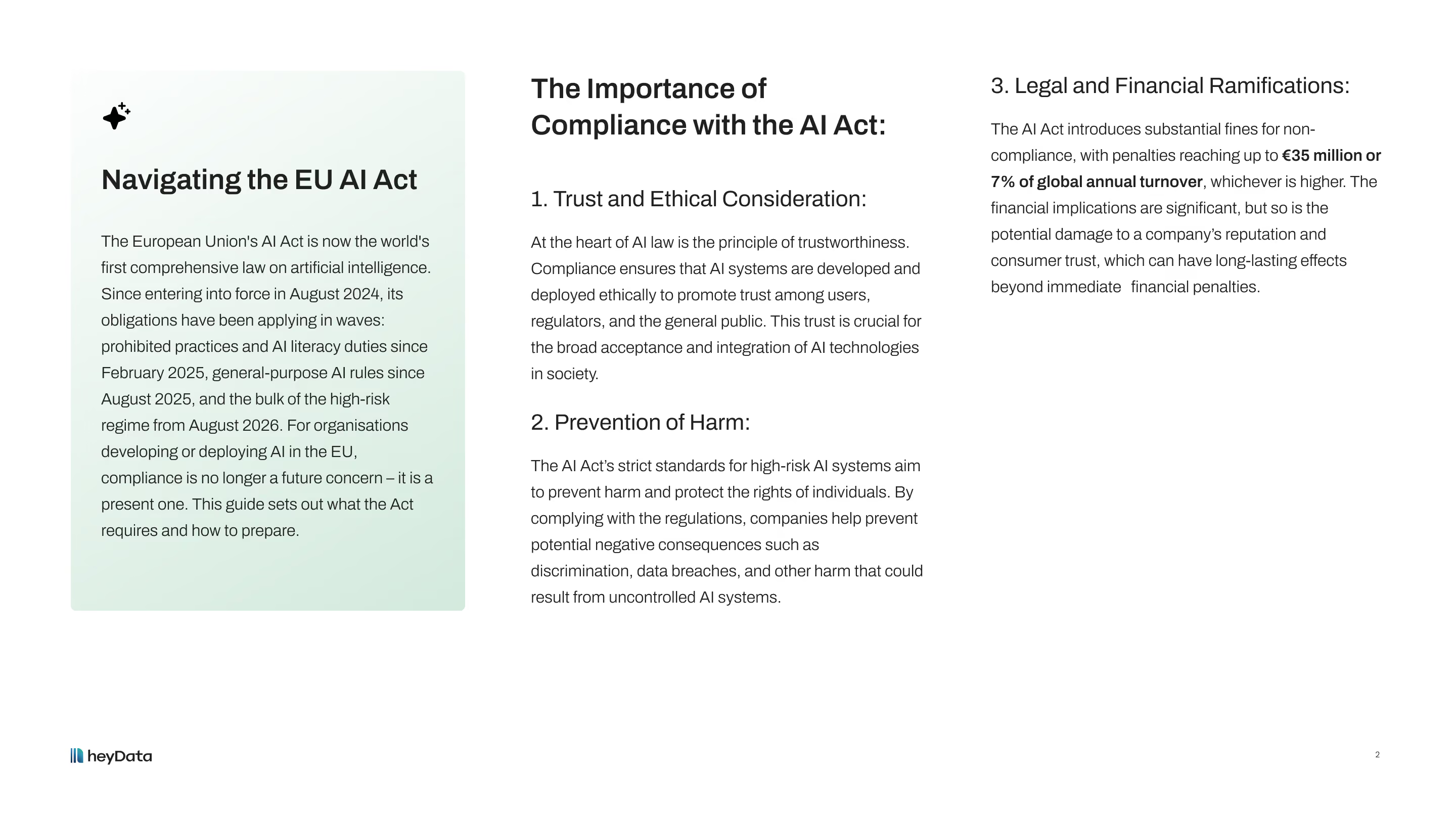
The EU AI Act is the world's first comprehensive set of rules for artificial intelligence. Its requirements take effect in stages: bans on certain AI practices and the AI literacy obligation already apply, requirements for general-purpose AI models have been added, and a large share of the requirements for high-risk AI follows from August 2026.
That means AI compliance is no longer a topic for the future. Companies need to know today which systems they develop, purchase, or use, which role they play in the process, and which risk class each application falls into.
AI systems in areas such as HR, credit scoring, critical infrastructure, biometrics, and public administration are particularly relevant. They're subject to strict requirements for risk management, data quality, technical documentation, human oversight, and ongoing monitoring.
Establishing structured AI governance early doesn't just reduce regulatory risks. Clear responsibilities, documented decisions, and transparent processes also strengthen the trust of customers, employees, and business partners.
What This Whitepaper Covers
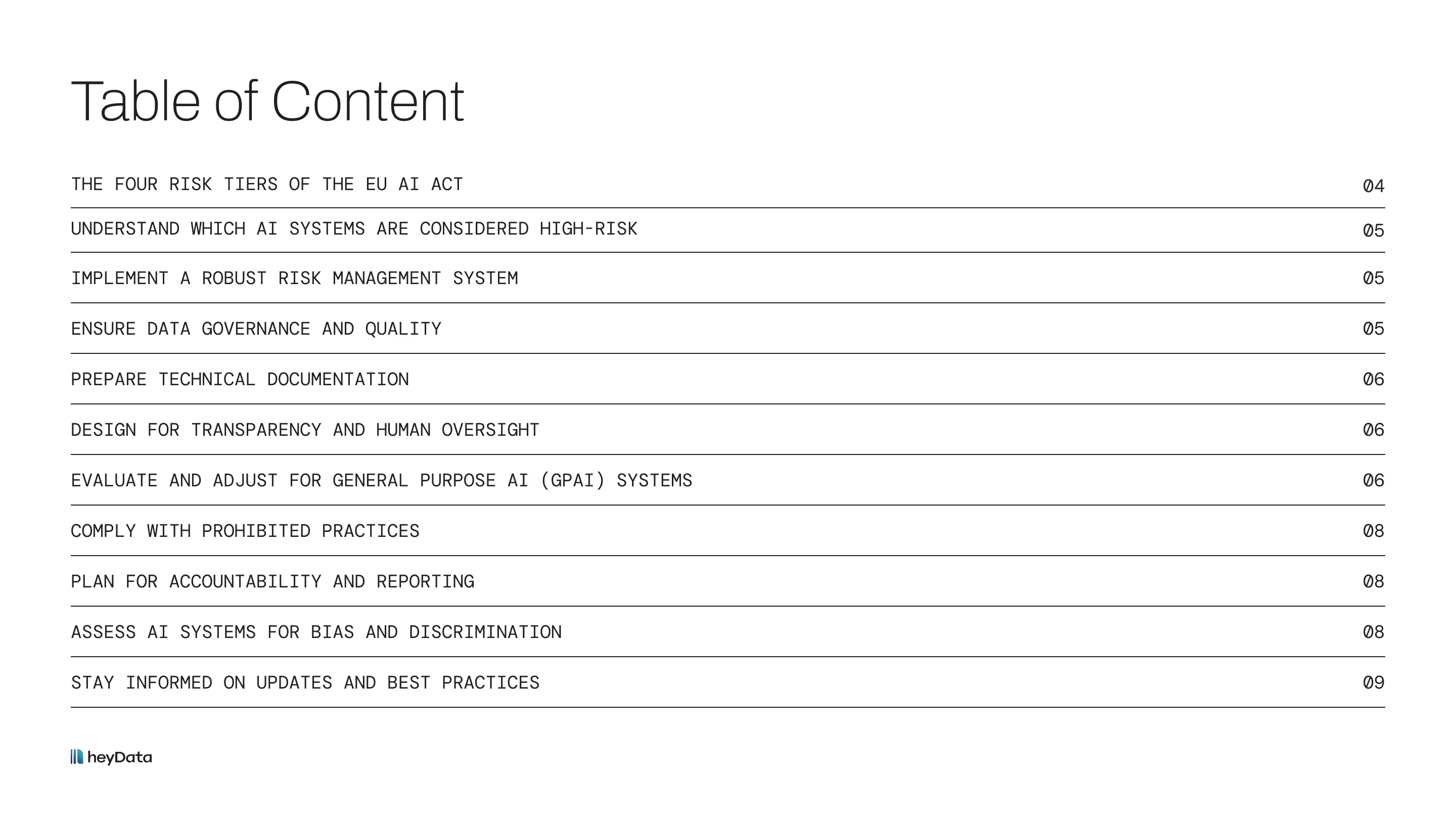
- Chapter 1: The Four Risk Classes of the EU AI Act — Prohibited, high-risk, limited-risk, and minimal-risk AI applications clearly explained
- Chapter 2: Correctly Identifying High-Risk AI — How to identify systems from regulated products and particularly sensitive use cases
- Chapter 3: Establishing Robust Risk Management — How to assess and document risks across the entire lifecycle of your AI systems
- Chapter 4: Ensuring Data Quality and Data Governance — Requirements for training, validation, and test data, plus measures against bias
- Chapter 5: Preparing Technical Documentation — Which evidence providers of high-risk AI need before market launch and during ongoing operation
- Chapter 6: Designing Transparency and Human Oversight — How users can understand results, detect anomalies, and effectively control systems
- Chapter 7: Correctly Assessing General-Purpose AI — Which obligations apply to providers, developers, and users of general-purpose AI models
- Chapter 8: Ruling Out Prohibited AI Practices — Social scoring, manipulative AI, untargeted facial image scraping, and other banned applications
- Chapter 9: Organizing Accountability and Incident Reporting — Responsibilities, post-market monitoring, escalation paths, and regulatory reports
- Chapter 10: Avoiding Bias and Discrimination — How to test AI systems for unfair treatment and systematically account for fundamental rights
- Chapter 11: Keeping Track of Regulatory Developments — Continuously integrating AI Office guidance, harmonized standards, and best practices
"Responsible AI doesn't start with technology — it starts with clear rules for who assesses risks, documents decisions, and can intervene when it counts."
Who Is This Whitepaper For?
This guide is aimed at managing directors, compliance officers, data protection officers, legal teams, IT leads, product managers, HR managers, and AI project teams that develop, purchase, or use artificial intelligence.
The whitepaper is especially helpful for organizations that first want to create transparency across their AI landscape and check which applications fall under the EU AI Act.
Companies using generative AI, recruiting tools, automated decision-making systems, or industry-specific high-risk applications will also find clear guidance on governance, documentation, and internal responsibilities.

Download the Complete EU AI Act Guide Now
10 pages of practical insights on risk classes, high-risk AI, prohibited applications, data quality, documentation, and a concrete 10-point roadmap for your AI compliance.

Conclusion
The EU AI Act demands more from companies than a one-time review of their AI tools. What matters is lasting governance that captures all systems, regularly reassesses risks, and clearly assigns responsibilities.
The first step is a complete AI inventory. Next comes classification by risk class and company role: provider, deployer, importer, or distributor. For high-risk systems, risk management, data quality, documentation, transparency, and human oversight then need to be implemented in a structured way.
Checking for prohibited practices is just as important. Every application should be assessed in writing and re-checked whenever its intended purpose changes. Employees also need sufficient AI literacy so they can operate systems safely, recognize their limits, and report incidents early.
Since guidance and harmonized standards are continuously being refined, your compliance system needs to stay adaptable, too. Building AI governance in a structured way today reduces risks, keeps innovation projects on track, and builds trust in the responsible use of artificial intelligence.