Why GDPR Compliance Is Business-Critical for SaaS Providers
SaaS providers often process personal data in a complex technical environment. Information flows through cloud infrastructures, product databases, analytics tools, support systems, and numerous sub-processors. Without a clear overview, gaps in legal bases, deletion periods, access rights, and documentation quickly emerge.
Responsibility doesn't end at your own system boundary. The security and data protection practices of hosting providers, software partners, and other sub-processors can directly affect your own compliance. At the same time, customers expect clear contracts, reliable deletion processes, and verifiable security evidence.
Retrofitting data protection into an established product often means high rework costs, delayed sales processes, and additional audit effort. But when data mapping, privacy by design, and vendor management are considered from the start, compliance becomes a genuine trust and competitive advantage.
What This Whitepaper Covers
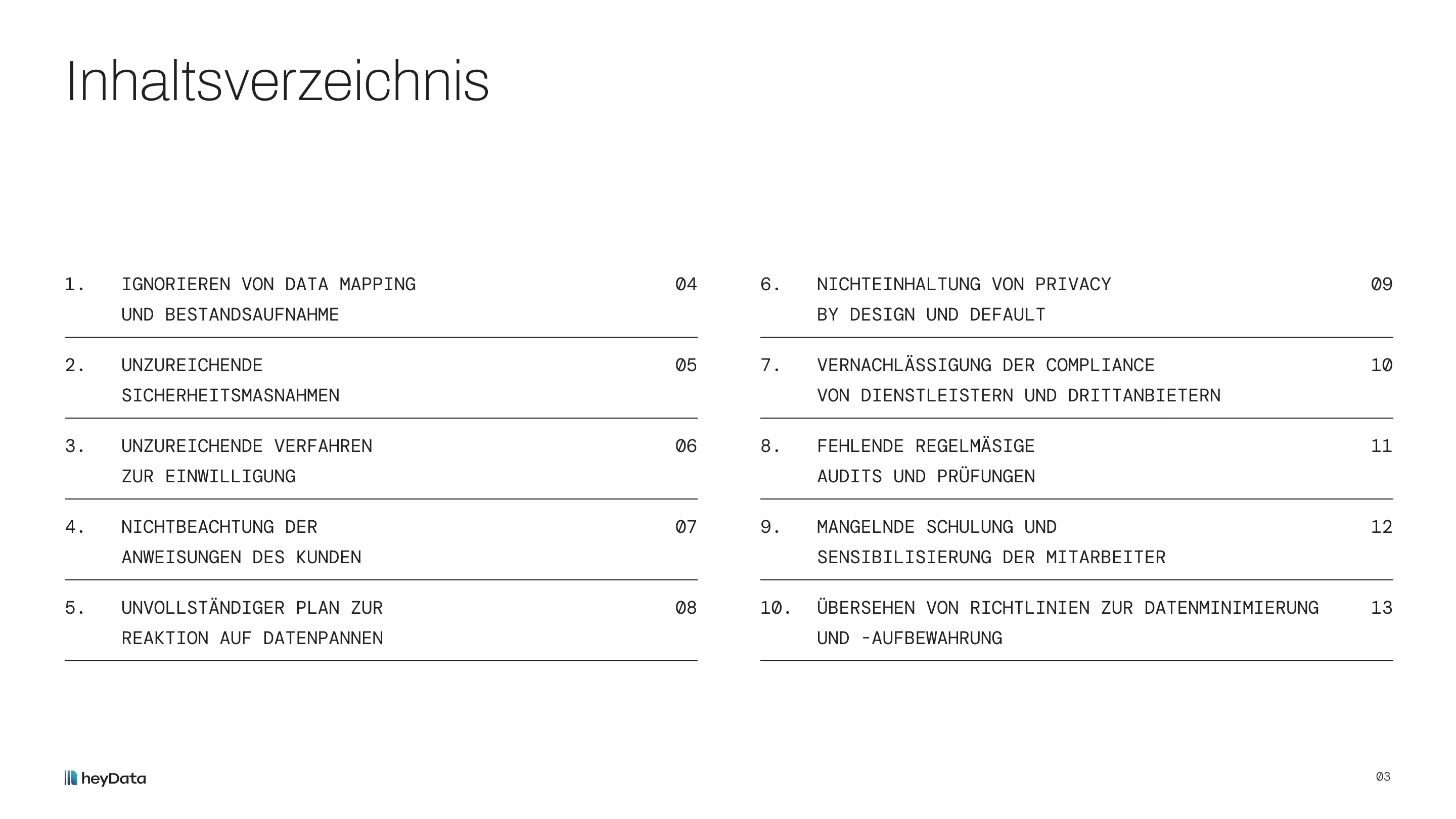
- Mistake 1: Ignoring data mapping and inventory — how to fully document data sources, storage locations, data flows, and processing activities
- Mistake 2: Insufficient security measures — why encryption, access controls, updates, and security monitoring are essential
- Mistake 3: Flawed consent processes — how to make consent voluntary, transparent, and verifiable
- Mistake 4: Disregarding customer instructions — how clear contracts, documented processes, and communication channels prevent violations
- Mistake 5: No complete data breach response plan — how to prepare detection, containment, notification, and remediation
- Mistake 6: Neglecting privacy by design and default — how to embed data protection in product development and default settings from the start
- Mistake 7: Failing to vet service providers and third parties — how to assess, document, and monitor the entire processing chain
- Mistake 8: Skipping regular audits — how internal and external reviews reveal compliance gaps early
- Mistake 9: Undertraining employees — how role-specific trainings reduce human error and data breaches
- Mistake 10: Overlooking data minimization and retention — how to set clear deletion periods and avoid unnecessary data
"GDPR compliance doesn't start with a single document. It's built on transparent data flows, secure systems, and processes that work reliably every day."
Who Is This Whitepaper For?
This guide is aimed at founders, managing directors, CTOs, product leads, CISOs, data protection officers, compliance managers, and operations teams in SaaS companies.
The whitepaper is especially helpful for providers that process personal data in cloud systems, work with international sub-processors, or want to professionalize their data protection processes as the company grows.
Product and development teams will benefit from this guide, too. Many of the mistakes described originate in architecture decisions, default configurations, or the selection of new tools — long before a data protection issue becomes visible.

Download the Complete GDPR Guide for SaaS Providers
16 pages of practical insights on the most common data protection mistakes — with concrete solutions, checklists, and real-world examples.

Conclusion
The most common GDPR mistakes among SaaS providers rarely result from a single wrong decision. In most cases, transparency, clear responsibilities, or regularly maintained processes are missing.
Complete data mapping creates the foundation for understanding data flows, storage locations, and service providers. On top of that come secure product architectures, legally compliant consent processes, solid contracts, and clear deletion rules. Regular audits and trainings ensure that these measures aren't just documented but keep working over the long term.
A proactive approach is especially important. Privacy by design, secure default settings, and a tested incident response plan shouldn't wait until after a data breach or customer audit. The same applies to overseeing sub-processors and international data transfers.
Companies that integrate data protection into their product, processes, and culture from the start not only reduce regulatory risks but also strengthen customer trust, sales readiness, and sustainable growth.