Why ISO 27001 Is Becoming More Important for Companies
Cyberattacks, supply chain risks, and growing customer requirements have made information security a core business issue. Today, companies not only need to implement appropriate safeguards — they also increasingly need to demonstrate that their processes actually work.
ISO 27001 provides an internationally recognized framework for this. At its core is an information security management system, or ISMS, that brings together risks, responsibilities, policies, security measures, and continuous improvement in one structured process.
Certification doesn't just strengthen the protection of customer, employee, and business data. It can also simplify sales processes, speed up security reviews, and increase the trust of customers and partners. Especially in tenders and regulated supply chains, solid proof of information security is increasingly becoming a decisive competitive advantage.
What This Whitepaper Covers
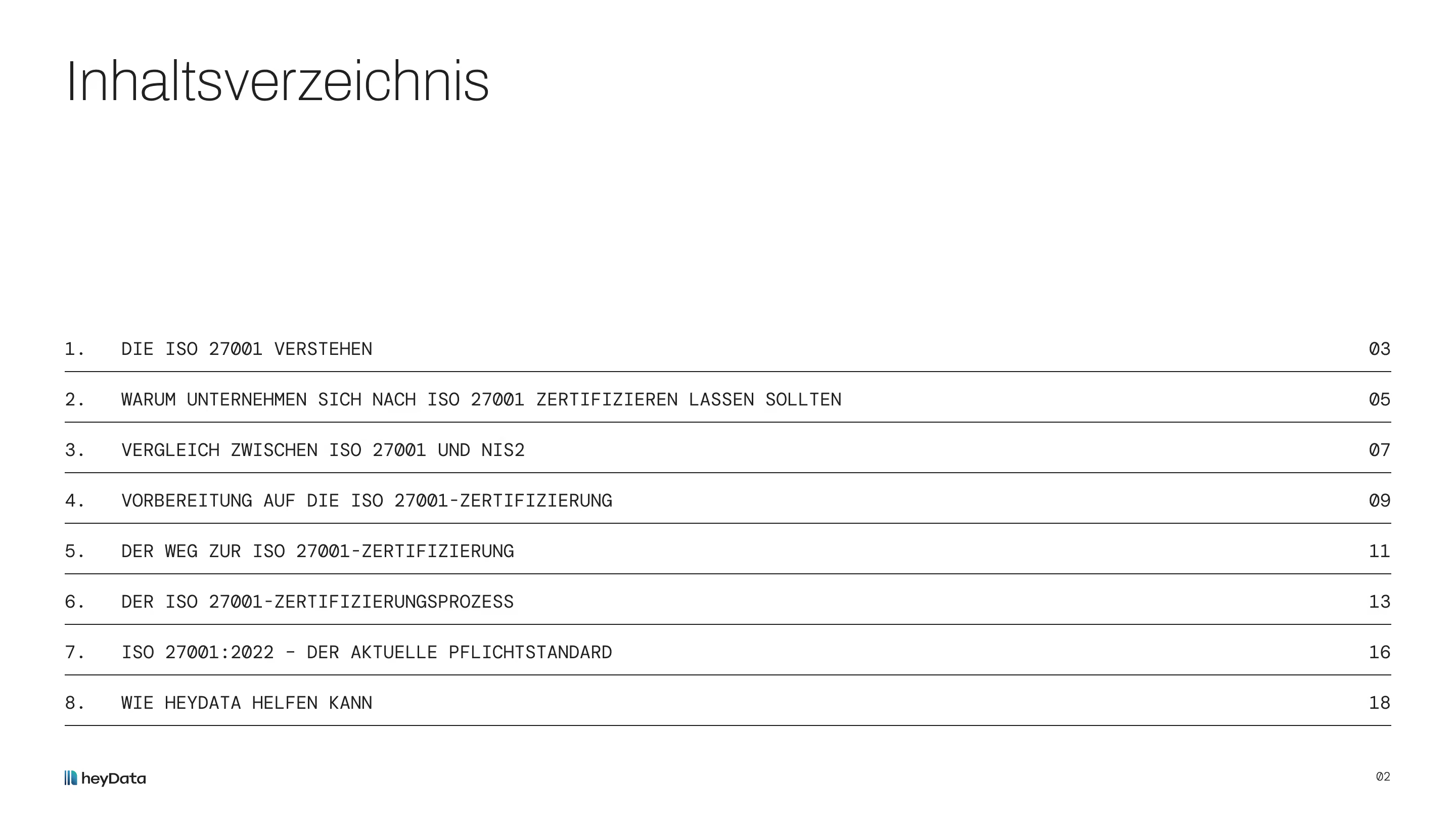
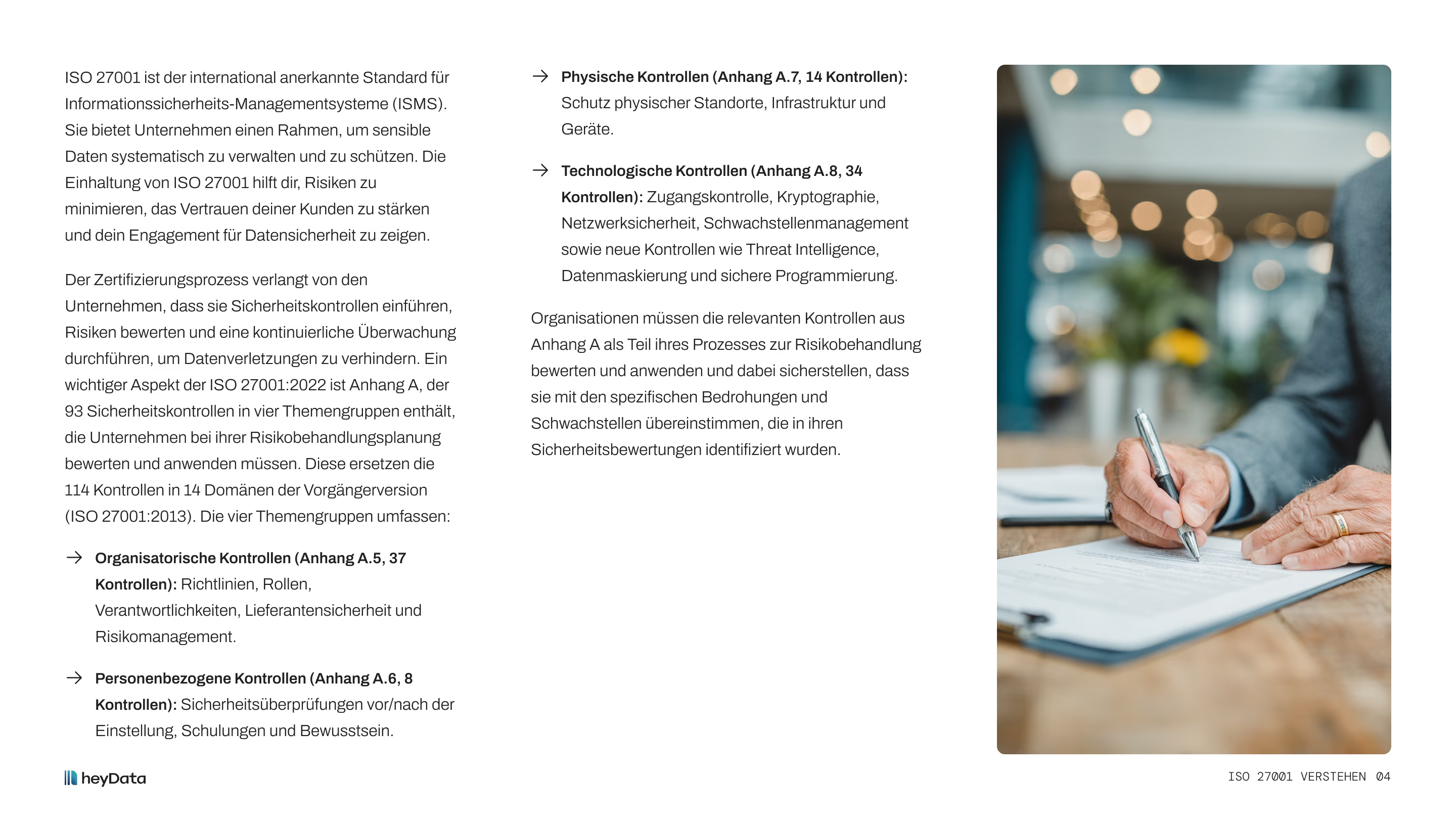
- Chapter 1: Understanding ISO 27001 — How an ISMS works and which 93 controls of ISO 27001:2022 need to be considered
- Chapter 2: Why certification pays off — Protecting sensitive data, reducing risks, increasing resilience, and building customer trust
- Chapter 3: ISO 27001 and NIS2 compared — Differences in scope, mandatory status, risk management, and incident reporting
- Chapter 4: Preparing for certification — Gap analysis, management support, scope, policies, trainings, and documentation
- Chapter 5: The path to ISO 27001 certification — The four phases from preparation and implementation to continuous improvement
- Chapter 6: The certification process — Document review, certification audit, issuing of the certificate, surveillance, and recertification
- Chapter 7: ISO 27001:2022 as the current standard — The most important changes compared to the 2013 version and the new controls
- Chapter 8: Support with implementation — How gap analyses, internal audits, trainings, and compliance tools simplify the process
"ISO 27001 is more than a certificate. The standard creates a system for measuring, auditing, and continuously improving information security."
Who Is This Whitepaper For?
This guide is aimed at managing directors, CISOs, IT leads, information security officers, compliance managers, risk managers, and project leads who want to build an ISMS or prepare their company for ISO 27001 certification.
The whitepaper is especially helpful for organizations that need to meet customer security requirements, improve their position in tenders, or organize information security in a structured, lasting way.
Companies preparing for NIS2 also get a clear picture of which requirements ISO 27001 already covers and where additional legal obligations need to be considered.

Download the complete ISO 27001 guide now
20 pages of practical knowledge on ISMS, risk management, ISO 27001 controls, audit preparation, and the certification process — including a clear roadmap for implementation.

Conclusion
A successful ISO 27001 certification doesn't start with the external audit. It starts with a clearly defined scope, a sound risk assessment, and the support of top management.
Building on that, you need to develop suitable policies and security controls, assign responsibilities, and train employees. Just as important is clear documentation that lets you demonstrate risks, decisions, incidents, and improvement measures at any time.
The certificate itself is only a milestone. Annual surveillance audits, regular internal reviews, and full recertification after three years ensure that your ISMS remains effective in the long run. New threats, system changes, and business developments must be considered continuously.
Treating ISO 27001 as an ongoing management process doesn't just protect sensitive information — it creates a solid foundation for trust, compliance, and sustainable growth.