Why IT Compliance Is Essential for Consultants Today
Many IT consultants assume that data protection and compliance mainly concern their clients. But administrative access to servers, databases, cloud platforms, or applications alone can trigger extensive obligations. If you process personal data on behalf of clients or help shape technical safeguards, you become a central part of your client's compliance structure.
Add to that the work with external tools, freelancers, and subcontractors. Faulty access rights, missing contracts, or undocumented data flows can cause more than security incidents. They can also mean your clients no longer meet their own regulatory requirements.
Especially in regulated industries, clients therefore expect verifiable evidence: up-to-date Data Processing Agreements, documented technical and organizational measures, clear incident response processes, and reliable information on the security of the service providers involved. If you build these foundations in a structured way, you reduce risks and position yourself as a professional, dependable partner.
What This Whitepaper Covers
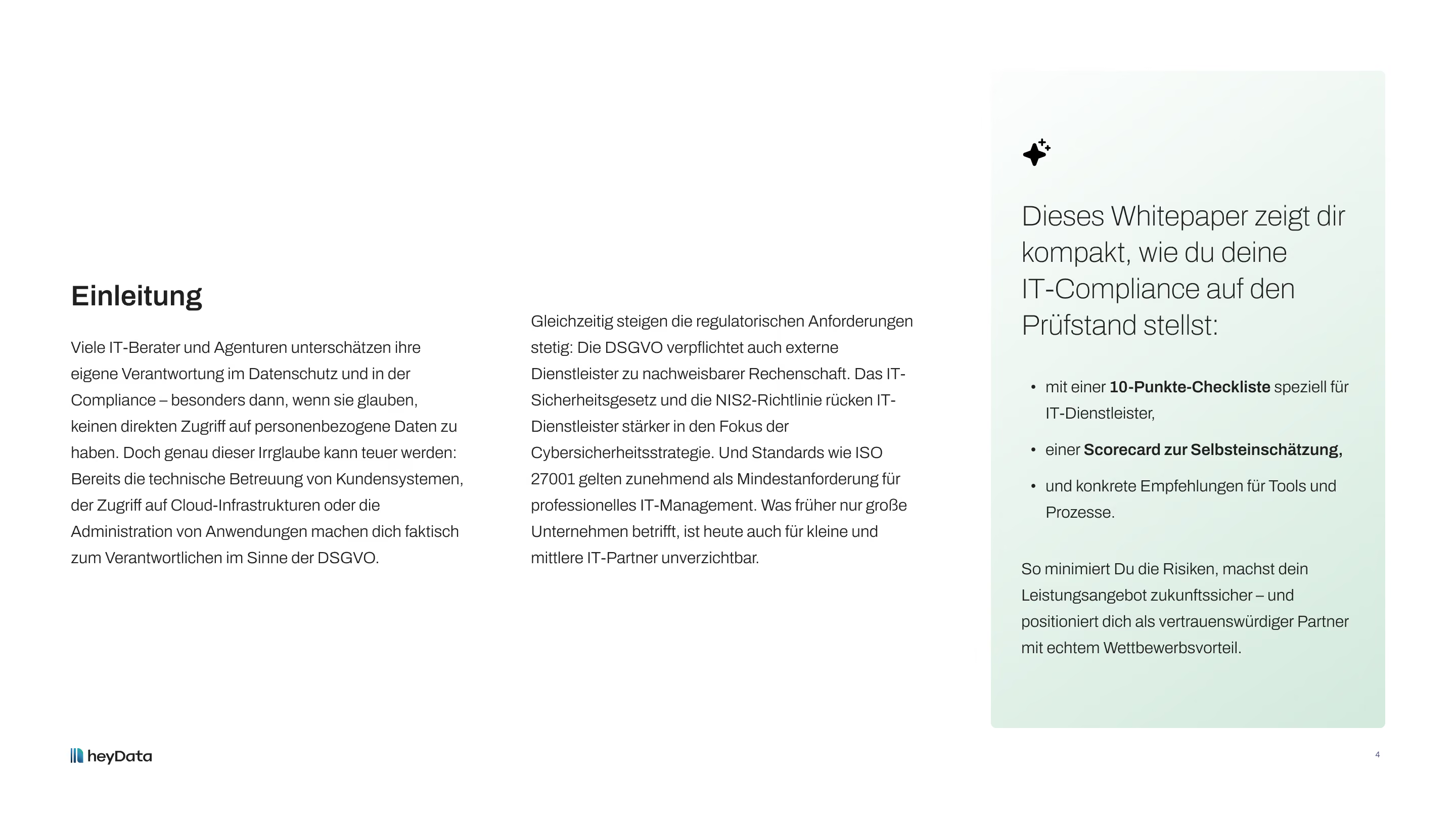
- Chapter 1: Why IT compliance isn't optional — What responsibility already arises from technical support, cloud access, and system administration
- Chapter 2: The most important basics — What IT compliance means and why IT consultants face particular demands around data protection, security, and documentation
- Chapter 3: Relevant laws and standards — GDPR, IT security law, BSI IT-Grundschutz, NIS2, ISO 27001, and the EU AI Act clearly explained
- Chapter 4: The 10-point scorecard — Self-assessment covering DPAs, TOMs, access management, subcontractors, incident response plans, ROPA, and audits
- Chapter 5: What's mandatory now — The key requirements and how they interact in the day-to-day compliance work of IT service providers
- Chapter 6: Quick wins and best practices — Immediately actionable measures for documentation, contract processes, IAM, training, and internal policies
- Chapter 7: Risks and typical pitfalls — Missing DPAs, shadow IT, unclear responsibilities, missing training, and unprepared security incidents
- Chapter 8: Compliance as a selling point — How documented processes build trust and improve your chances in tenders
"In IT consulting, it's not just technical quality that sets you apart — it's also the proof of how securely and responsibly you handle data and systems."
Who Is This Whitepaper For?
This guide is for independent IT consultants, IT service providers, agencies, managed service providers, system houses, managing directors, project leads, and information security officers.
The whitepaper is especially relevant for teams that regularly access client systems, integrate cloud and SaaS solutions, or work with external developers and subcontractors.
IT partners of companies in healthcare, finance, energy, public administration, or other regulated industries will also get a practical overview of the evidence clients increasingly expect and the processes worth establishing early on.

Download the Complete IT Compliance Checklist
25 pages of practical insights with a 10-point scorecard, quick wins, a risk matrix, and concrete recommendations on GDPR, NIS2, ISO 27001, and the EU AI Act.

Conclusion
IT compliance doesn't start with a certification — it starts with clear foundations. For every client, you should clarify whether data is processed on their behalf, which data is involved, and who has access to systems and information.
Building on that, you need up-to-date TOMs, a well-maintained Record of Processing Activities, vetted subcontractors, and a working incident response plan. Centralized access management, regular training, and documented risk analyses ensure these requirements are also met in day-to-day project work.
A recurring process is especially effective: data protection and tool checks, audits, and risk assessments should be carried out regularly and documented in a traceable way. That's how you spot new gaps before they become a problem.
At the same time, compliance is increasingly becoming a sales factor. Clients don't just want to hear that their data is safe. They expect proof. If you document your processes transparently and can provide evidence quickly, you build trust, shorten reviews, and improve your chances in demanding projects and tenders.