
Why NIS2 and ISO 27001 Belong on the Management Agenda
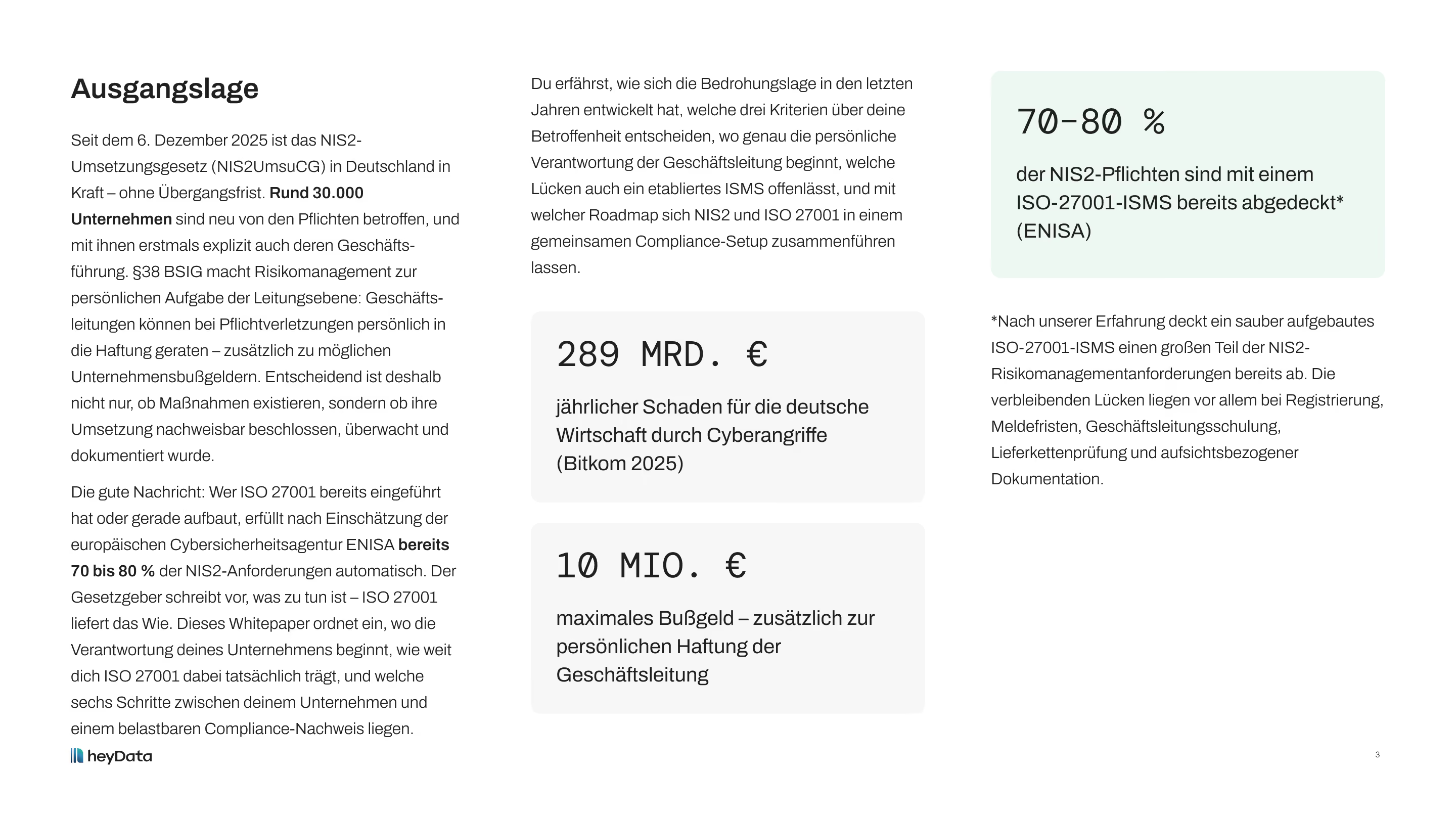
Cyberattacks today threaten more than systems and data — they endanger business operations, customer relationships, and access to important B2B contracts. Ransomware, extortion, and supply chain attacks can paralyze companies within a very short time.
NIS2 responds by explicitly making cybersecurity a leadership responsibility. Companies must not only implement appropriate measures but also prove that management has approved, monitored, and documented them. This puts management at the center of compliance responsibility.
ISO 27001 provides a strong foundation for this. An information security management system bundles roles, risk assessments, security measures, audits, and continuous improvement into one structured process. However, ISO 27001 doesn't fully replace the NIS2 requirements. Registration, statutory reporting deadlines, management evidence, and specific supply chain reviews must be implemented in addition.
What This Whitepaper Covers
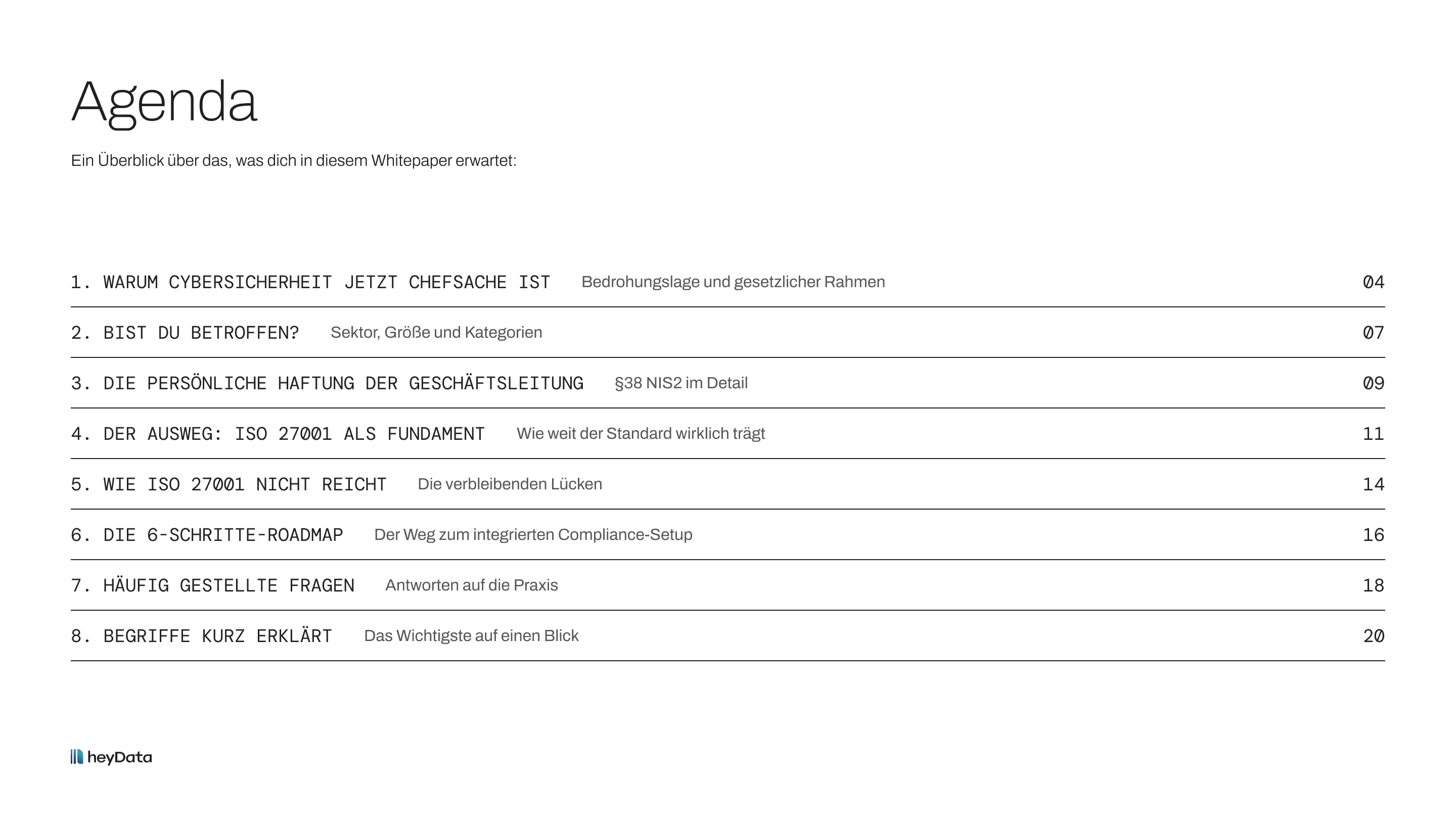
- Chapter 1: Why cybersecurity is now a management issue — the threat landscape, economic damage, and regulatory pressure
- Chapter 2: Is your company affected? — how industry, company size, and regulatory category determine your NIS2 obligations
- Chapter 3: Management's personal responsibility — approval, oversight, training, and potential liability consequences
- Chapter 4: ISO 27001 as a foundation — how an ISMS and the Plan-Do-Check-Act cycle enable structured security management
- Chapter 5: Where ISO 27001 falls short — registration, incident reporting, management documentation, supply chain reviews, and regulatory oversight
- Chapter 6: The 6-step roadmap — the practical path from applicability check and risk analysis to continuous improvement
- Chapter 7: Frequently asked questions — answers on certification, registration, GDPR documentation, implementation timelines, and company growth
- Chapter 8: Key terms explained — ISMS, PDCA, SoA, entity categories, and the BSI reporting portal
- Appendix: Mapping NIS2 to ISO 27001 — a detailed mapping of the requirements of Section 30 BSIG to the ISO 27001:2022 controls
"ISO 27001 creates the management structure for information security. NIS2 adds the legal obligations, deadlines, and evidence that turn it into solid compliance."
Who Is This Whitepaper For?
This guide is aimed at managing directors, board members, CISOs, IT leads, compliance managers, risk managers, and information security officers who want to assess or systematically improve their company's NIS2 readiness.
The whitepaper is especially relevant for companies that already operate an ISMS, are preparing for ISO 27001 certification, or want to avoid building separate processes for information security and NIS2.
Suppliers and service providers benefit from this guide, too. Even if they don't fall directly under the regulatory thresholds, they increasingly need to provide solid security evidence in tenders and supply chain reviews.

Download the Complete NIS2 and ISO 27001 Guide Now
24 pages of practical insights on management responsibility, NIS2 applicability, ISO 27001 coverage, remaining compliance gaps, and a concrete 6-step roadmap.

Conclusion
NIS2 fundamentally changes how companies must approach cybersecurity. The topic can no longer be fully delegated to IT. Management must understand risks, approve measures, monitor their implementation, and keep reliable records of its decisions.
ISO 27001 offers a strong basis for this because the standard establishes clear roles, structured processes, and a continuous improvement cycle. However, an ISO-compliant ISMS doesn't automatically equal full NIS2 compliance. Statutory registration, reporting deadlines, management trainings, evidence that holds up with authorities, and in-depth supply chain reviews remain separate tasks.
The most efficient approach is to manage both frameworks together. Start by checking whether you're affected, identify the remaining gaps, assess assets and risks, document decisions, and establish an ISMS that's regularly reviewed and refined. Acting early not only reduces regulatory and operational risks but also strengthens your position in customer audits, tenders, and long-term business relationships.