
Why NIS2 Is Now Critical for Companies
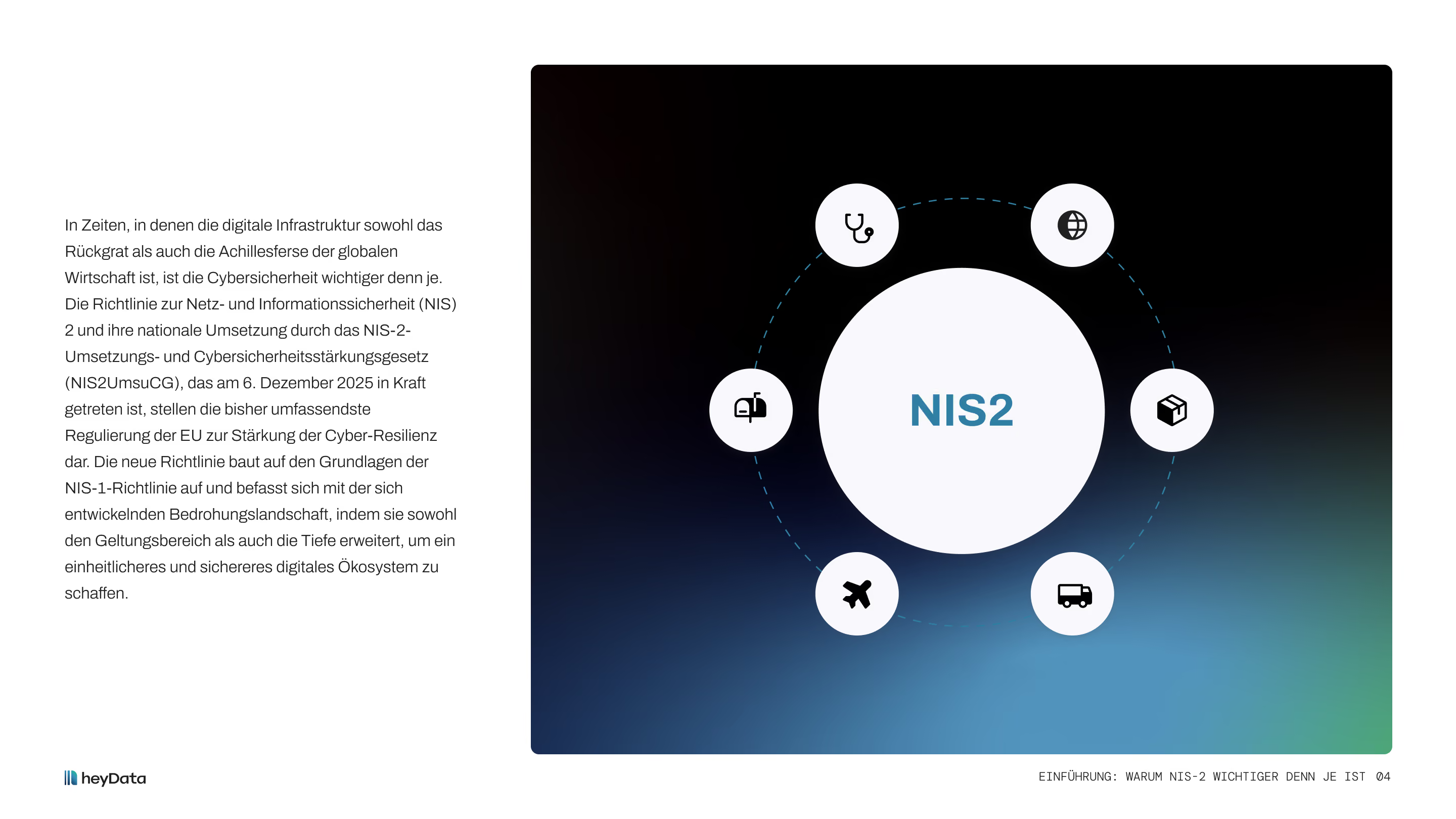
Digital infrastructure has long been more than just a technical foundation. It's a central part of almost every business model — and thus an attractive target for cyberattacks. NIS2 responds to this development with a significantly expanded scope and stricter requirements for risk management, governance, reporting processes, and documentation.
It's not just classic operators of critical infrastructure that are affected. Medium-sized and large companies from sectors such as energy, healthcare, financial services, transport, public administration, digital infrastructure, and IT services can also fall under the regulation. At the same time, NIS2 moves responsibility further up to the leadership level: cybersecurity can't simply be delegated to IT teams — it must be integrated into corporate governance, processes, and supply chains.
If you implement the requirements in a structured way, you reduce more than regulatory risks. Robust security management protects business operations, strengthens the trust of customers and partners, and increases resilience against cyber incidents.
What This Whitepaper Covers
- Chapter 1: Why NIS2 Matters More Than Ever — The background of the directive and its significance for the digital economy
- Chapter 2: Who NIS2 Is Relevant For — Affected sectors, company sizes, and implications for management and operations
- Chapter 3: Consequences of Non-Compliance — Fines, personal liability, operational downtime, and reputational damage
- Chapter 4: Step by Step to NIS2 Compliance — Audit, strategic planning, documentation, and continuous monitoring
- Chapter 5: The Biggest Challenges — Resource shortages, knowledge gaps, and cross-departmental coordination
- Chapter 6: Practical Examples and Best Practices — Regular risk assessments, collaboration, and employee training
- Chapter 7: Compliance as a Competitive Advantage — How NIS2 conformity strengthens trust, stability, and market position
"NIS2 compliance isn't just a regulatory task. It's the foundation for resilient processes, secure supply chains, and lasting trust."
Who Is This Whitepaper For?
This guide is aimed at managing directors, boards, CISOs, IT leads, risk managers, compliance officers, and data protection officers who need to assess whether their company falls under NIS2 or are already planning concrete implementation measures.
The whitepaper is especially relevant for medium-sized and large organizations in energy, financial services, healthcare, transport, water, public administration, digital infrastructure, and IT services.
Companies that aren't directly affected themselves but work as service providers or suppliers for regulated organizations also benefit from a better understanding of the requirements. Security credentials and resilient processes are increasingly becoming a prerequisite for business relationships along the entire supply chain.

Download the Full NIS2 Guide Now
26 pages of practical insights on applicability, management responsibility, reporting deadlines, risk management, and lasting cyber resilience.

Conclusion
NIS2 demands more than individual technical protection measures. Companies must treat cybersecurity as an ongoing management process — with clear responsibilities, documented risk measures, functioning reporting channels, and regular reviews.
The most sensible starting point is a structured assessment. This is followed by a prioritized roadmap, the implementation of suitable security controls, and complete documentation. Regular audits, cross-departmental collaboration, and continuous training then ensure that compliance exists in practice, not just on paper.
The key is not to view NIS2 solely as an obligation. If you organize cybersecurity transparently and anchor it for the long term, you protect your operations, strengthen the trust of your stakeholders, and create a real competitive advantage.